

As a high-voltage power cable supplier, I've witnessed firsthand how temperature can significantly influence the performance and lifespan of these crucial electrical components. In this blog, I'll delve into the various impacts of temperature on high-voltage power cables, drawing on both industry knowledge and practical experience.
Thermal Expansion and Contraction
One of the most immediate effects of temperature changes on high-voltage power cables is thermal expansion and contraction. Like most materials, cables expand when heated and contract when cooled. This mechanical movement can lead to several issues.
When a cable expands due to rising temperatures, it can put stress on the cable's insulation and connectors. Over time, this stress can cause the insulation to crack or separate from the conductor, increasing the risk of electrical breakdown. Additionally, expansion can lead to misalignment of connectors, resulting in poor electrical contact and increased resistance.
Conversely, when a cable contracts in cold temperatures, it can become brittle. The insulation may lose its flexibility, making it more susceptible to damage from mechanical stress, such as bending or vibration. In extreme cases, the contraction can even cause the cable to break, leading to a complete loss of power.
Insulation Performance
The insulation of high-voltage power cables is designed to prevent electrical current from leaking out and to protect the cable from external factors. Temperature plays a crucial role in determining the effectiveness of this insulation.
As the temperature rises, the insulation material's electrical properties can change. The dielectric constant, which measures the ability of the insulation to store electrical energy, can increase, leading to higher capacitance and increased power losses. Additionally, the insulation resistance can decrease, allowing more current to leak through the insulation.
High temperatures can also accelerate the aging process of the insulation material. Oxidation and chemical reactions can occur more rapidly at elevated temperatures, causing the insulation to degrade over time. This degradation can lead to a reduction in the cable's insulation resistance and an increased risk of electrical breakdown.
On the other hand, extremely low temperatures can also affect the insulation performance. The insulation material may become stiff and less flexible, reducing its ability to conform to the shape of the conductor and providing less effective protection. Cold temperatures can also cause moisture to condense on the surface of the cable, which can further degrade the insulation.
Current-Carrying Capacity
The current-carrying capacity of a high-voltage power cable is the maximum amount of electrical current that the cable can safely carry without exceeding its temperature rating. Temperature has a direct impact on this capacity.
As the temperature of the cable increases, the resistance of the conductor also increases. According to Ohm's Law (V = IR), an increase in resistance means that more power is dissipated as heat for a given current. This heat generation can cause the cable temperature to rise further, creating a positive feedback loop.
If the cable temperature exceeds its rated limit, the insulation can be damaged, and the cable's lifespan can be significantly reduced. Therefore, the current-carrying capacity of a cable is typically derated at higher temperatures to ensure safe operation.
For example, a cable that can carry a certain amount of current at an ambient temperature of 20°C may have its current-carrying capacity reduced by 20% or more at an ambient temperature of 40°C. This derating is necessary to prevent the cable from overheating and to maintain its long-term reliability.
Impact on Cable Joints and Terminations
Cable joints and terminations are critical components of a high-voltage power cable system. They are where the cable is connected to other electrical equipment or to another cable, and they must provide a reliable electrical connection and effective insulation.
Temperature can have a significant impact on the performance of cable joints and terminations. Similar to the cable itself, thermal expansion and contraction can cause stress on the joint or termination, leading to mechanical damage. The insulation materials used in joints and terminations may also be affected by temperature changes, leading to a reduction in insulation performance.
In addition, high temperatures can cause the sealing compounds used in joints and terminations to soften or melt, allowing moisture and contaminants to enter the joint. This can lead to corrosion and electrical breakdown, which can ultimately result in a failure of the joint or termination.

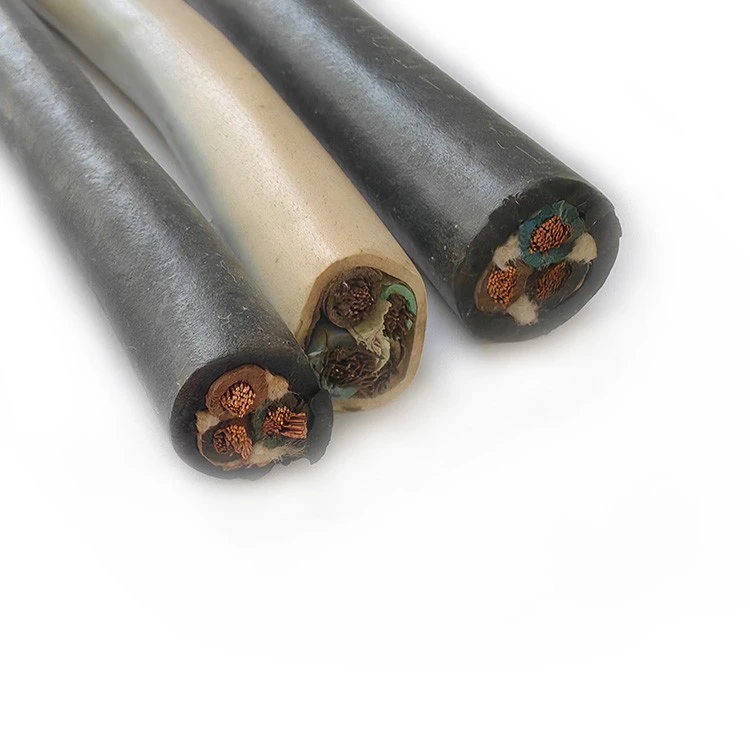
Mitigating the Effects of Temperature
As a high-voltage power cable supplier, we understand the importance of mitigating the effects of temperature on our products. There are several strategies that can be employed to minimize the impact of temperature on high-voltage power cables.
One approach is to use high-quality insulation materials that are designed to withstand a wide range of temperatures. These materials should have good thermal stability, low dielectric constant, and high insulation resistance. Additionally, the insulation should be properly installed and maintained to ensure its long-term performance.
Another strategy is to provide adequate ventilation and cooling for the cables. This can help to dissipate the heat generated by the cable and prevent the temperature from rising too high. In some cases, forced ventilation or cooling systems may be required, especially in high-temperature environments or in areas with high cable densities.
Proper cable sizing is also essential. By selecting a cable with a sufficient current-carrying capacity for the intended application, the risk of overheating can be reduced. It's important to consider the ambient temperature, the expected load, and any potential future growth when sizing the cable.
Finally, regular inspection and maintenance of the cable system are crucial. This can help to identify any potential issues early on and to take corrective action before they lead to a failure. Inspections should include checking the cable temperature, the insulation resistance, and the condition of the joints and terminations.
Conclusion
Temperature has a profound impact on the performance and lifespan of high-voltage power cables. From thermal expansion and contraction to insulation degradation and reduced current-carrying capacity, the effects of temperature can be significant. As a high-voltage power cable supplier, we are committed to providing our customers with high-quality products that are designed to withstand the challenges of temperature variations.
If you're in the market for high-voltage power cables, we invite you to explore our High Voltage Cable Price List. We also offer a wide range of High Tension Electric Cable and Heavy Duty Power Cord High Voltage options to meet your specific needs.
Contact us today to discuss your requirements and to learn more about how our high-voltage power cables can provide reliable and efficient power transmission in any temperature environment.
References
- IEEE Standard for Power Cable Systems Rated 5000 Volts and Below
- IEC 60287 - Calculation of the Continuous Current Rating of Cables
- National Electrical Code (NEC)