

Hey there! As a supplier of electrical power cords, I often get asked about how to measure the diameter of these cords. It might seem like a simple question, but there's actually quite a bit to it. So, let's dive right in and explore the ins and outs of measuring the diameter of an electrical power cord.
First off, why would you even need to measure the diameter of a power cord? Well, there are a few reasons. For one, the diameter can give you an idea of the cord's capacity to carry electrical current. A thicker cord generally means it can handle more power without overheating. This is crucial when you're using high - wattage appliances. Also, if you're installing a cord in a tight space, knowing the diameter helps ensure it'll fit properly.
Now, let's talk about the tools you'll need. The most common and easiest tool for measuring the diameter of a power cord is a caliper. You can find calipers at most hardware stores or online. They come in both digital and manual versions. Digital calipers are super convenient as they give you an accurate reading right on a screen. Manual calipers work just as well, but you have to read the measurement off a scale.
Another tool you can use is a micrometer. Micrometers are even more precise than calipers, but they're a bit more expensive and usually used in more professional or industrial settings. If you're just doing some basic measurements at home or in a small workshop, a caliper should be more than enough.
Okay, so you've got your tool. How do you actually measure the cord? Here's a step - by - step guide:
Step 1: Prepare the Cord
Make sure the power cord is clean and free of any dirt or debris. If there's any dust or grime on the cord, it can affect the accuracy of your measurement. Also, straighten out the cord as much as possible. If it's all coiled up, you won't get an accurate reading.
Step 2: Position the Measuring Tool
Open the jaws of your caliper or micrometer wide enough to fit around the cord. Place the tool around the thickest part of the cord. For most power cords, this is usually near the plug or the connector. Make sure the tool is perpendicular to the length of the cord. If it's at an angle, you'll get an incorrect measurement.
Step 3: Take the Measurement
Gently close the jaws of the tool until they touch the cord. Be careful not to squeeze too hard, as this can deform the cord and give you a wrong measurement. Once the jaws are snug against the cord, read the measurement on the caliper or micrometer. If you're using a digital caliper, it'll display the measurement right away. If it's a manual caliper, look at the scale and find the line that lines up with the zero mark on the sliding scale.
Step 4: Repeat for Accuracy
To make sure your measurement is accurate, take a few more measurements at different points along the cord. The diameter of a power cord can vary slightly along its length. By taking multiple measurements, you can get an average and a more accurate representation of the cord's true diameter.
It's important to note that when we talk about the diameter of a power cord, we're usually referring to the outer diameter. This is the measurement of the entire cord, including the insulation. The inner diameter, which is the diameter of the actual conductive wires inside the cord, is also important, but it's a bit more difficult to measure. You'd have to strip the insulation off the cord to measure the inner diameter, and that's not something you should do unless you know what you're doing and have the proper safety equipment.
Now, let's talk about some common issues you might run into when measuring the diameter of a power cord. One issue is that some cords have a non - circular shape. For example, some flat cords or cords with multiple conductors grouped together might not have a perfect circular cross - section. In these cases, you can measure the width and height of the cord and then use a formula to calculate an equivalent diameter. A simple way to do this is to take the average of the width and height.

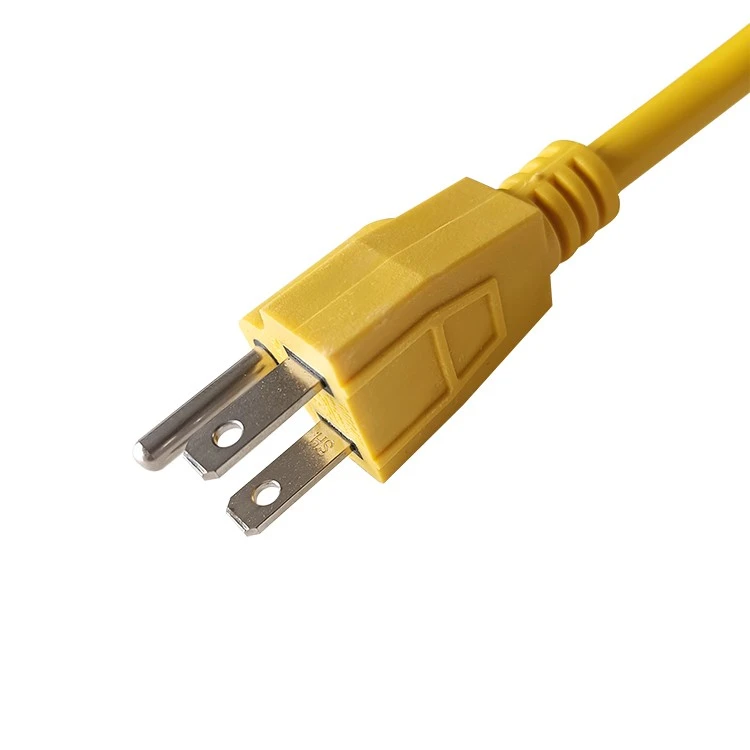
Another issue is that the insulation on the cord can be compressed or deformed over time. If the cord has been bent or coiled tightly for a long time, the insulation might be thinner in some areas. This can affect your measurement. To get around this, try to measure the cord in an area where it hasn't been damaged or deformed.
As an electrical power cord supplier, I know that different applications require different cord diameters. For example, if you're using a cord for a small household appliance like a lamp or a phone charger, a thinner cord will usually do the job. But if you're powering a large appliance like a refrigerator or an air conditioner, you'll need a thicker cord.
We offer a wide range of electrical power cords to meet your needs. Check out our All Kinds Of Electrical Power Cord page to see our full selection. If you need a heavy - duty cord, our 12 Gauge Appliance Extension Cord is a great option. And if you're short on space, our Short Appliance Extension Cord might be just what you're looking for.
If you're still not sure which cord is right for you or if you have any questions about measuring cord diameters, don't hesitate to reach out. We're here to help you make the right choice for your electrical needs. Whether you're a DIY enthusiast or a professional electrician, we've got the cords and the expertise to support you.
In conclusion, measuring the diameter of an electrical power cord is an important step in ensuring that you're using the right cord for your application. With the right tools and a little bit of know - how, you can easily measure the diameter of any cord. And if you're in the market for a new power cord, we're here to provide you with high - quality products and excellent customer service.
References:
- Basic Electrical Engineering textbooks
- Hardware store guides on measuring tools