

Why Choose Us
Hebei Lineng Cable Co., Ltd. has more than 20 years of industry experience, 100 employees, Ten thousand square meters, daily production capacity of 500,000 meters, annual sales revenue of 200 million yuan.
Wide Product Range
The main production and sales of copper core cable, aluminum core cable, new energy charging station cable of products.
Quality Assurance
The entire production and operation process of the company is strictly in accordance with the requirements of CE certification, CCC certification, Rhine certification, 9001 certification, 14001 certification, 45001 certification and quality management system standards, the implementation of comprehensive quality control, so as to ensure product quality.
Wide Range of Applications
Our products are widely used in Industrial production, people's work, home life, daily travel, etc.
OEM & ODM Available
The company can also accept OEM, ODM cooperation.
What is Indoor Strip Cable
Wire stripping is a necessary component of nearly any electrical project. It refers to the process of removing the outer protective layer of insulation while making certain to not slice the components beneath. Wires are usually crafted out of metal to compliment their ability to conduct electricity. If you want to know the specifications and prices of Indoor Strip Cable, please contact us!
-
![USB Only Power Strip]() USB Only Power StripThis cable is suitable for: Outdoor landscape engineering, building lighting, rural street lights, rural photovoltaic power generation, farming, monitoring, fire protection, machinery, water pumps,read more
USB Only Power StripThis cable is suitable for: Outdoor landscape engineering, building lighting, rural street lights, rural photovoltaic power generation, farming, monitoring, fire protection, machinery, water pumps,read more -
![Outdoor Extension Cord with Surge Protector]() Outdoor Extension Cord with Surge ProtectorPure copper wire core is safe and practical.. Choose high quality oxygen-free copper core as conductor, durable arc, longer service life.. National standard three plug bare tail line CCCread more
Outdoor Extension Cord with Surge ProtectorPure copper wire core is safe and practical.. Choose high quality oxygen-free copper core as conductor, durable arc, longer service life.. National standard three plug bare tail line CCCread more -
![Flush Mount Power Strip with USB]() Flush Mount Power Strip with USBProduct name: Copper core PVC insulated PVC sheathed wire. Product model: ZR-RVV. Insulation material: Black PVC (PVC). Conductor material: multiple oxygen-free copper wireread more
Flush Mount Power Strip with USBProduct name: Copper core PVC insulated PVC sheathed wire. Product model: ZR-RVV. Insulation material: Black PVC (PVC). Conductor material: multiple oxygen-free copper wireread more -
![Travel Extension Cord with USB]() Travel Extension Cord with USBThree-plug bare wire tail power cord is widely used to protect home electricity. 2500W. Do not settle for quality. Thickened coreread more
Travel Extension Cord with USBThree-plug bare wire tail power cord is widely used to protect home electricity. 2500W. Do not settle for quality. Thickened coreread more -
![Extension Cord Connected To Power Strip]() Extension Cord Connected To Power StripCoarse non-oxidized pure copper core is safer without ironing.. 3*1.5 square outer diameter 8.2MM is recommended for use within 3500W.. 3*2.5 square outer diameter 10.5MM recommended for use withinread more
Extension Cord Connected To Power StripCoarse non-oxidized pure copper core is safer without ironing.. 3*1.5 square outer diameter 8.2MM is recommended for use within 3500W.. 3*2.5 square outer diameter 10.5MM recommended for use withinread more


Electrical Safety
Insulation provides a protective barrier between the electrical conductor and its surroundings, minimizing the risk of electric shock. It helps prevent accidental contact with live wires, reducing the potential for injuries and fatalities.
Protection Against Short Circuits
Short circuits occur when two or more conductors come into direct contact, causing an excessive current flow. Insulation prevents short circuits and associated risks like fires, equipment damage, and electrical system failures.
Thermal insulation
Electrical insulation materials often have good thermal properties. They can withstand high temperatures, which is especially important in high-power applications or when the wires are close to heat-emitting components.
Electrical noise reduction
When wires are not adequately insulated, electromagnetic waves can be emitted, causing interference with nearby electronic devices or other sensitive equipment. Insulation reduces the emission of these waves and provides shielding against external electromagnetic interference.
Improved Performance and Efficiency
Insulating wires and cables can enhance electrical performance and efficiency. It helps maintain the integrity of the electrical signals by minimizing losses due to leakage, capacitance, or inductive effects. Insulation also prevents energy losses through the conductor, improving the overall efficiency of electrical systems.
Durability and Protection Against Environmental Factors
Insulation materials are designed to withstand various environmental conditions, including moisture, chemicals, UV radiation, and mechanical stress. Insulation shields the conductors from these elements, preventing degradation, corrosion, or breakdown that could affect the electrical performance or lifespan of the wires.
Code Compliance
Properly insulating wires and cables ensures compliance with electrical codes and standards, promoting electrical safety and reducing the risk of legal and regulatory consequences.
Types of Indoor Strip Cable



NM Cable
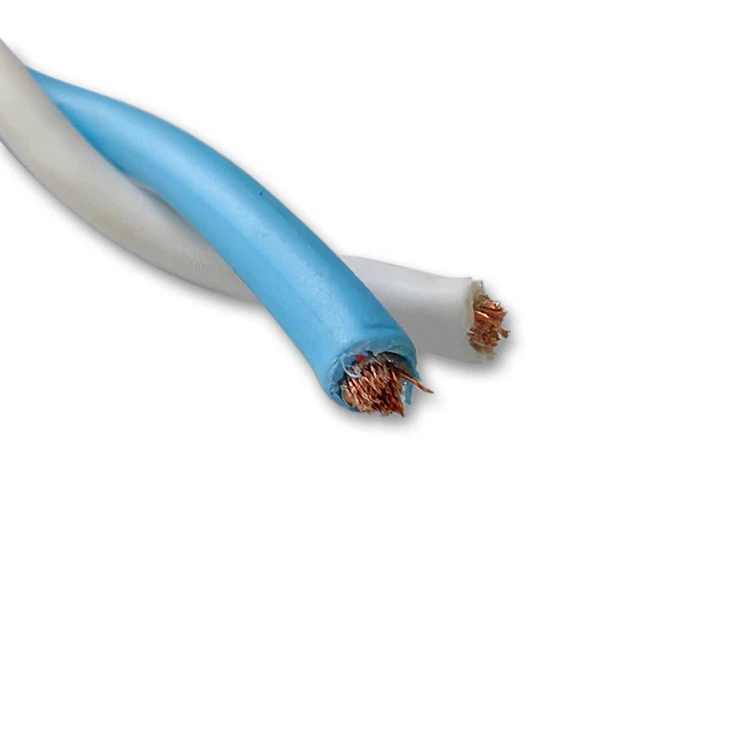
Often called “Romex” after one popular brand name, nonmetallic (NM) cable is a type of circuit wiring designed for interior use in dry locations. NM is the most common type of wiring in modern homes. It consists of two or more individual wires wrapped inside a protective plastic sheathing. NM cable usually contains one or more “hot” (current-carrying) wires, a neutral wire, and a ground wire.
UF Cable
Underground Feeder (UF) is a type of nonmetallic cable designed for wet locations and direct burial in the ground. It is commonly used for supplying outdoor fixtures, such as lampposts. Like standard NM cable, UF contains insulated hot and neutral wires, plus a bare copper ground wire. But while sheathing on NM cable is a separate plastic wrap, UF cable sheathing is solid plastic that surrounds each wire.
This type of electrical wire is also a bit more expensive than NM wire because of its durable insulation. UF cable is normally sold with gray outer sheathing.
THHN/THWN Wire
THHN and THWN are codes for the two most common types of insulated wire used inside conduit. Unlike NM cable, in which two or more individually insulated conductors (copper or aluminum) are bundled inside a plastic sheathing, THHN and THWN wires are single conductors, each with its color-coded insulation. Instead of being protected by NM cable sheathing, these wires are protected by tubular metal or plastic conduit.
Conduit is often used in unfinished areas, such as basements and garages, and for short exposed runs inside the home, such as wiring connections for garbage disposers and hot water heaters. These wires typically have similar prices to NM wire (plus the cost of the conduit).
Low-Voltage Wire
Low-voltage wiring is used for circuits typically that require minimal voltage, such as landscape lighting wires, sprinkler system connections, bell wires (for doorbells), speaker system wires, thermostat wires, or anything else that requires 50 volts or less. Wire sizes range from about 22 gauge to 12 gauge, and these wires can be made of copper or aluminum.
Low-voltage wires typically are insulated and may be contained in cable sheathing or combined in twisted pairs, similar to lamp cord wire. These are typically very small wires that are much different from standard circuit wiring, and their costs tend to be lower than other household wires.
Serious shocks rarely occur with low-voltage wires, but it is still always best to turn off devices before working with them.
Phone and Data Wire
Telephone and data wiring are low-voltage wires used for landline phones and internet connections, typically made from copper. Telephone cables may contain four or eight wires, while ethernet cables (internet connection) consist of eight wires arranged in four twisted pairs.
The most commonly used telephone and data wires are Cat 5 (category 5) cable and its more modern counterpart Cat 6, which can be used for both phone and data transmission and offer greater capacity and quality than standard phone wire. Like low-voltage wire, ethernet cables are often cheaper than other types of household wiring like NM or UF cables.
Although data wiring does carry a small amount of voltage, anything under 30 volts is generally regarded as safe (a household circuit carries about 120 volts of power).1 However, there is always a danger of data wiring coming into contact with household wiring, so you should treat it with caution and avoid touching bare wires.
Coaxial Cable
Coaxial cable, or "co-ax," is used for connecting TVs to antenna, cable services, and satellite dishes. While still used today, it's beginning to grow less common thanks to the use of other forms of data wiring, such as HDMI, for television data transmission. The minuscule amount of voltage carried by coaxial cable signals makes it very unlikely to cause a shock of any type—provided the cables are not in contact with another source of current.
Coaxial cable is a round, jacketed cable that features an inner conductor (usually copper) surrounded by a black or white tubular insulating layer, surrounded by a tubular conducting shield made of braided wire. It can be identified by the threaded connectors that are used to make unions and device hookups.
Speaker Wire
Speaker wire is a simple two-conductor strand consisting of wires individually wrapped in plastic. Though connected, they can easily be separated by hand. There is no difference between the two wires electrically speaking, but one or both wires will often feature some type of marking to make them more easily traceable over a distance. This helps ensure proper polarity when wiring up speakers.
When choosing speaker wire, consult the manufacturer's instructions closely. Many speaker manufacturers will specify choosing larger gauge wire if running longer distances of wire or wiring up higher-ohm systems.
Application of Indoor Strip Cable
House Wiring
Thinking of the best electric cables best for house wiring? Tend industrial supplies got you covered. The Single core wire is one of the most popular for various purposes at home, at work, and in commercial settings. The most common use for this type of cable is to transfer electrical power from one spot to another, but it can also be used for other things, depending on the size of the single core wire you need. For example, you might use it to wire electrical appliances or equipment.
The single core unsheathed wires can also be used for electrical applications involving computers, power control panels, and electrical gadgets. This type of cable is more commonly known as braided cable. For applications that may be susceptible to electromagnetic interference (EMI), you can also buy a single core wire that comes with special shielding that's manufactured into the cable. A similar configuration shielding might also be available for flexible multicore cables.
Shielded or braided cables are designed to prevent outside forces, such as signals from communication equipment or electromagnetic pulses from high-powered electrical or electronic devices, from interfering with their function. Electricians might use a single core braided cable to protect the cable from Electromagnetic interference (EMI) if it passes near a microwave oven or other household cooking appliance. For example, if an electrical generator is near the cabling application, the EMI from the generator might impact the integrity of the cable. By using a shielded or braided cable, you can minimize the risk of your equipment not functioning as intended.
Braiding and shielding can also be used to slightly strengthen single core flexible wires for specific applications. This is often done by engineers when a project requires a little more durable cable than usual.
The metallic braiding in cables serve two purposes: it helps deflect EMI, which could interfere with the cabling application, and it strengthens the overall cable. Using a single core braided cable, as opposed to an unshielded one, protects the cable from mechanical stress and prolongs its lifespan. Doing this, will help to ensure that the wires are able to withstand any potential damage that might occur during the installation process.
Several Industrial Applications
Many projects require multicore cables because they can handle higher power demands, more significant stress during installation and operation, and harsher working conditions. For instance, the industrial sector often uses various multicore cable types because of these reasons. Additionally, while single core automotive cables are a popular choice for many interior electrical components, auto parts maufacturers often use thin wall multiple core cables.
These multicore flexible wires are designed for high density wiring between components and within instruments and electronic equipment. They are extensively used in aircraft, avionic control systems, computers, data processors, process control systems, military vehicles and ancillary military equipment.
Many professionals in the electrical cabling industry often need clarification on the unique aspect of multicore cable sizes. While it is true that multicore cable suppliers manufacture these cables with multiple cores sheathed inside a jacket, only some cables with numerous cores inside its jacket are a multicore cable. For a cable to be multicore, it must have more than one twisted pair of wires or optical fibers inside the jacket. These pairs must be capable of carrying signals independently of each other.
The reasons engineers and electricians prefer multicore over single core cable are functionality and space. Firstly, because cables with multiple cores can deliver multiple functions, like earthing/grounding, neutral, and live, engineers and electricians can install a single multicore cable and complete the project.
There are also variations in use considerations when deciding to use either solid or stranded multicore cable types. Because stranded cable offers greater flexibility by design, compared to its solid core counterpart of equivalent gauge, it performs better in a multicore cable application that requires frequent movement – for instance, supplying power to a moving crane arm or an overhead pulley system. On the other hand, most other applications, where regular movement isn't a priority, like power to a motherboard, on a circuit board, or inside static equipment such as washing machines or microwave ovens, using multicore cable sizes of any denomination might be an overkill.
How to Choose Indoor Strip Cable
The first thing you’ll need to consider when choosing electric wires is their size. So, what is wire sizing, and why is it important in this context?
This factor indicates the diameter of the copper conductor. Most users across the globe use the American Wire Gauge (AWG) as the standard measuring system. A wire’s gauge basically relates to the amount of current it can safely carry at any given time.
If you don’t properly match your cables with their corresponding circuits’ amperage, there is a substantial risk of short circuits and even fire. The right size of the wire is determined by checking the gauge, current capacity, and the purpose of the wire.
Also known as ampacity, this factor refers to the amount of current that a cable can carry safely without causing any damage. The size of the cable is directly proportional to its ampacity. Therefore, if you’re looking for a conductor that can handle more current, you’ll need to choose a large cable size.
Understanding this aspect is important because it gives you an idea of the maximum load your circuit can handle safely. The bigger the load, the more the current that can be drawn from the source, which means you’ll need a wire with a bigger diameter.
Another important thing to keep in mind when selecting an electrical wire is its purpose. Where are you planning to use your cable? What are the specific sets of electric loads that will be connected to the circuit? Knowing this will help you decide on several things concerning the wire’s size and amperage.
As mentioned, every size has a maximum amount of current that it can handle. For instance, 1.5mm2 and 2.5mm2 cables have a safe current capacity of 10 amperes and 13.5 amperes respectively. It’s worth noting that these wires can carry more current than their rated values, but it’s best to stick to the rated values to avoid any risks.
That said, each of these cable sizes is designed for a specific purpose. For example, 1.5mm2 wire is mostly used to supply power in light-load circuits like bulbs and fluorescent tubes. A 2.5mm2 wire, on the other hand, is used for moderate-load circuit loads. These include home appliances like TV, fridge, laptop, and phone chargers. So, if you’re looking to repair your living room sockets, a 2.5mm cable will suffice.
What if your circuit has heavy loads like electric cookers? In most cases, such wiring projects use a 6mm cable because its surface area is big enough to conduct the required amount of current. Again, a 2.5mm wire can do the job but the current drawn by the cooker is beyond the wire’s safe carrying capacity.
The cable’s point of installation is another important factor to consider. For instance, outdoor installations should be able to withstand severe conditions. A well-insulated and protected cable should be used in such scenarios. Indoor installations, on the other hand, don’t necessarily need too much sheath but the insulation should still be within the regulations.
Another thing to keep in mind when deciding on the types of cables to use is the circuit breaker size. Every electric load has a specific circuit breaker that can safely handle the required current and break the flow when necessary.
Lights, for instance, generally use a 6-amp MCB, while regular sockets use a 13-amp breaker. The former should be connected through a 1.5mm wire while the latter requires a 2.5mm cable. A 32-amp breaker, majorly used in cooker circuits, will need a 6mm wire. Therefore, be sure to confirm the circuit breaker size before selecting your cable for the efficiency of your electrical power system.
Our Factory

Hebei Lineng Cable Co., Ltd. has more than 20 years of industry experience, 100 employees, Ten thousand square meters, daily production capacity of 500,000 meters, annual sales revenue of 200 million yuan. Is a professional production, power cable and wire enterprises. The main production and sales of 35KV, 15KV, 1KV, 750V copper core cable, aluminum core cable, new energy charging station cable, low smoke zero halogen cable, sheathed cable/shielding cable, control cable, high voltage cable, rubber sheathed cable, shielding machine cable, aluminum alloy cable, mine insulated copper cable, home laying cable and special cable hundreds of series, thousands of specifications of products.
The company can also accept OEM, ODM cooperation. Since its establishment, the company has adhered to technological progress and concept innovation, constantly strengthened internal management, advanced with the times, and formulated the quality policy of "customer-centric, based on production management, continuous improvement of quality system, and improvement of customer satisfaction products". Strictly in accordance with national and international standards to organize production, the implementation of raw material procurement to finished product delivery of the whole process control. The entire production and operation process of the company is strictly in accordance with the requirements of CE certification, CCC certification, Rhine certification, 9001 certification, 14001 certification, 45001 certification and quality management system standards, the implementation of comprehensive quality control, so as to ensure product quality.

Our Certificate

Frequently Asked Questions
As one of the leading indoor strip cable manufacturers and suppliers in China, we warmly welcome you to wholesale bulk high quality indoor strip cable in stock here from our factory. Contact us for free sample.
reliable indoor strip cable, indoor electrical strip cable, office indoor strip cable