

Hey there, fellow car enthusiasts! If you own a large - engine vehicle like a truck, SUV, or a big - block muscle car, you know how crucial it is to have the right automotive battery jumper cables on hand. As a supplier of automotive battery jumper cables, I've seen it all when it comes to choosing the perfect set for large - engine vehicles. In this blog, I'll share some tips and tricks to help you make the right decision.
Understanding the Needs of Large - Engine Vehicles
First things first, let's talk about why large - engine vehicles have different requirements for jumper cables. Large engines typically have bigger batteries, which means they need more power to start. When your battery is dead, you'll need jumper cables that can handle the high amperage required to crank over that big engine.
A small - gauge cable that might work fine for a compact car won't cut it for a large - engine vehicle. You'll end up with slow cranking or, worse, the cables could overheat and become a safety hazard. So, it's essential to choose cables that are up to the task.
Gauge Matters
The gauge of a jumper cable refers to the thickness of the wire inside. The lower the gauge number, the thicker the wire. For large - engine vehicles, you'll want a lower gauge cable. A good rule of thumb is to go for a 4 - gauge or even a 2 - gauge cable.
These thicker cables can carry more electrical current without overheating. Think of it like a water pipe. A wider pipe can carry more water than a narrow one, right? The same principle applies to jumper cables. A thicker wire can transfer more electricity, providing the power your large engine needs to start.
If you're not sure which gauge is right for your vehicle, check your owner's manual. It might have some recommendations. And if you're still in doubt, Best Heavy Duty Jumper Cables for Trucks is a great resource. It lists some of the top - rated heavy - duty cables for large vehicles.
Length is Important
The length of the jumper cables also matters, especially when dealing with large - engine vehicles. You'll want cables that are long enough to reach between the donor vehicle's battery and your large - engine vehicle's battery.
A standard 8 - foot cable can work for some setups, but if you need more flexibility, you might want to consider 10 - foot or even 12 - foot cables. Longer cables can be a lifesaver, especially if the two vehicles need to be parked at a distance or in an awkward position.
However, keep in mind that longer cables can have some drawbacks. The longer the cable, the more resistance there is, which can reduce the amount of power that reaches your battery. But with a good - quality, thick - gauge cable, the difference is usually negligible.
Clamp Quality
The clamps on your jumper cables are another critical factor. You need clamps that can grip the battery terminals securely. For large - engine vehicles, I recommend clamps that are heavy - duty and made of high - quality materials like copper or brass.
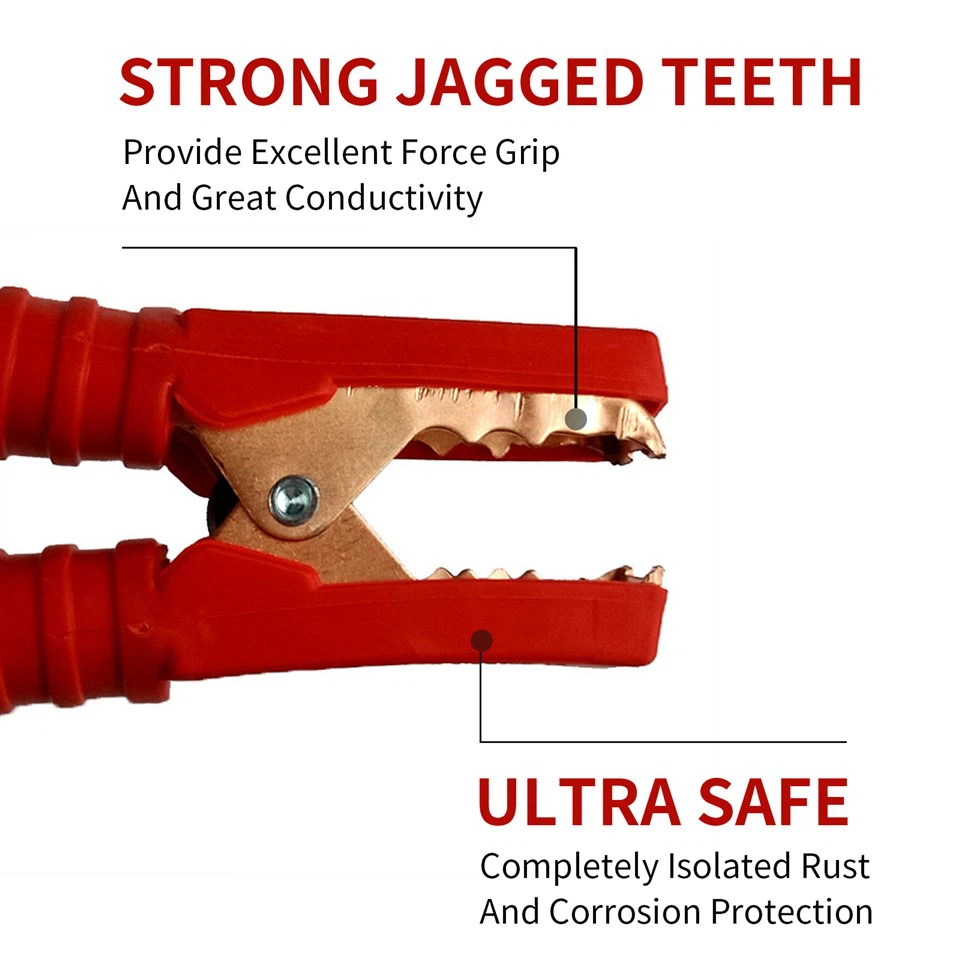
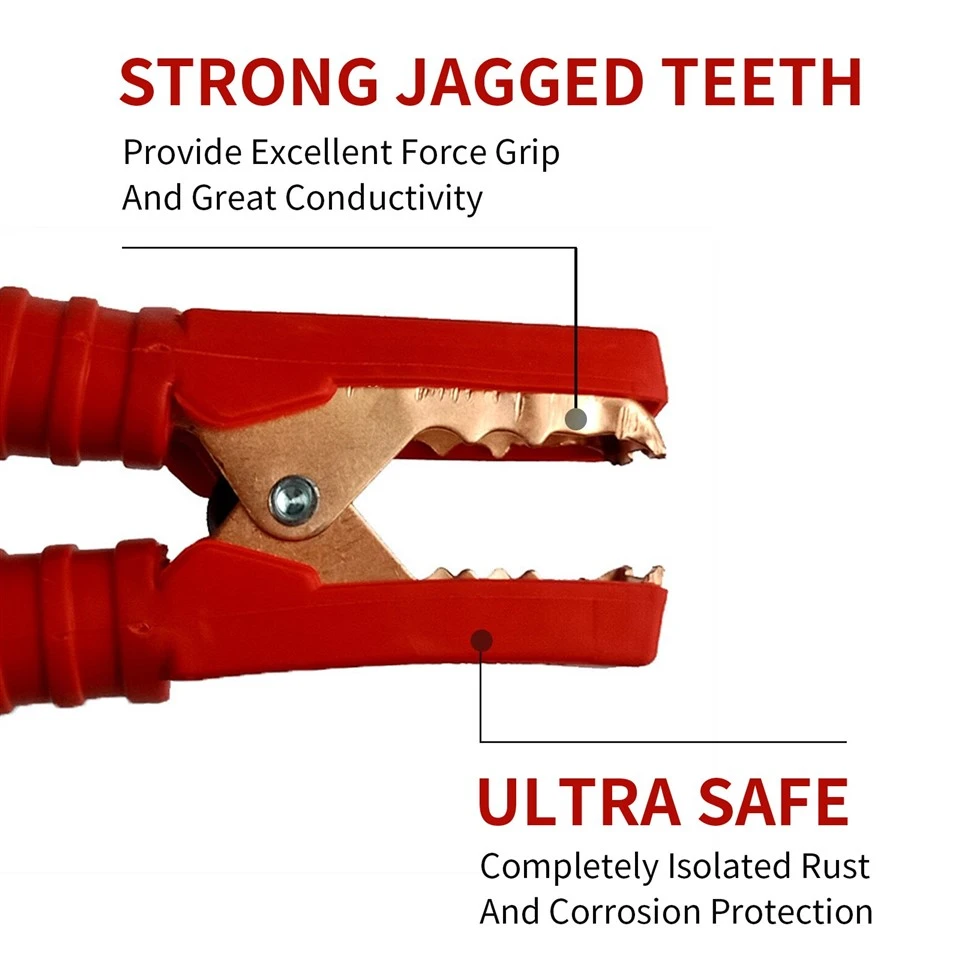
These metals are excellent conductors of electricity and can handle the high current flow. Look for clamps with serrated jaws. The serrations help to bite into the battery terminals, ensuring a good electrical connection. And make sure the clamps are spring - loaded. This feature allows them to stay tightly closed on the terminals, preventing any loose connections that could lead to arcing or overheating.
Additional Features
Some jumper cables come with additional features that can be really useful for large - engine vehicles. For example, some cables have built - in fuses. These fuses act as a safety device, protecting your vehicles' electrical systems from any electrical surges.
Others come with a carrying case. This is great for keeping your cables organized and protected when you're not using them. And if you're really into technology, you might want to check out Jumper Cables Portable Battery Charger. These are a combination of jumper cables and a portable battery charger, giving you an extra power source when you need it.
Brand and Reputation
When it comes to buying jumper cables, it's always a good idea to go with a well - known brand. A reputable brand is more likely to produce high - quality cables that meet or exceed industry standards. Do some research online, read reviews from other customers, and see what brands are recommended for large - engine vehicles.
You can also ask other owners of large - engine vehicles what cables they use. Word - of - mouth recommendations can be really valuable. And don't forget to check out Best Portable Jumper Cables for more information on top - rated brands and products.
Price vs. Quality
I know we all like to get a good deal, but when it comes to jumper cables for large - engine vehicles, you don't want to skimp on quality. A cheap set of cables might save you a few bucks upfront, but they could end up costing you more in the long run.
Low - quality cables are more likely to overheat, break, or provide insufficient power to start your large engine. So, invest in a high - quality set of cables. It's a small price to pay for the peace of mind knowing that you can start your vehicle when you need to.
Maintenance and Storage
Once you've chosen the right jumper cables for your large - engine vehicle, it's important to take good care of them. After each use, make sure to clean the clamps with a wire brush to remove any corrosion or dirt. This will help to maintain a good electrical connection.
Store your cables in a cool, dry place. Avoid storing them in direct sunlight or in a hot environment, as this can damage the insulation. And if your cables come with a carrying case, use it to keep them organized and protected.
Testing Your Jumper Cables
Before you actually need to use your jumper cables, it's a good idea to test them. You can do this by hooking them up to a healthy battery and checking for a good electrical connection. Make sure the clamps are securely attached and that there are no signs of arcing or overheating.
If you're not comfortable testing the cables yourself, you can take them to a professional mechanic. They can help you ensure that your cables are in good working condition.
Conclusion
Choosing the right automotive battery jumper cables for a large - engine vehicle isn't rocket science, but it does require some knowledge and consideration. Remember to pay attention to the gauge, length, clamp quality, additional features, brand, and price.
As a supplier of automotive battery jumper cables, I'm here to help you make the best choice. If you have any questions or need more information, don't hesitate to reach out. Whether you're a professional mechanic, a DIY enthusiast, or just someone who wants to be prepared for a dead battery, we have the right cables for you. Let's start a conversation about your specific needs and find the perfect set of jumper cables for your large - engine vehicle.
References
- General automotive battery and jumper cable knowledge from personal experience as a supplier
- Various online automotive forums and communities for user - reported experiences and recommendations