

Yo, what's up, car enthusiasts! I'm an automotive battery jumper cables supplier, and I get a ton of questions from customers. One of the most interesting ones I've been asked lately is, "Do automotive battery jumper cables work in salt - water environments?" It's a super valid question, especially for those of you who live near the coast or have to deal with salty roads in the winter. So, let's dive right in and explore this topic.
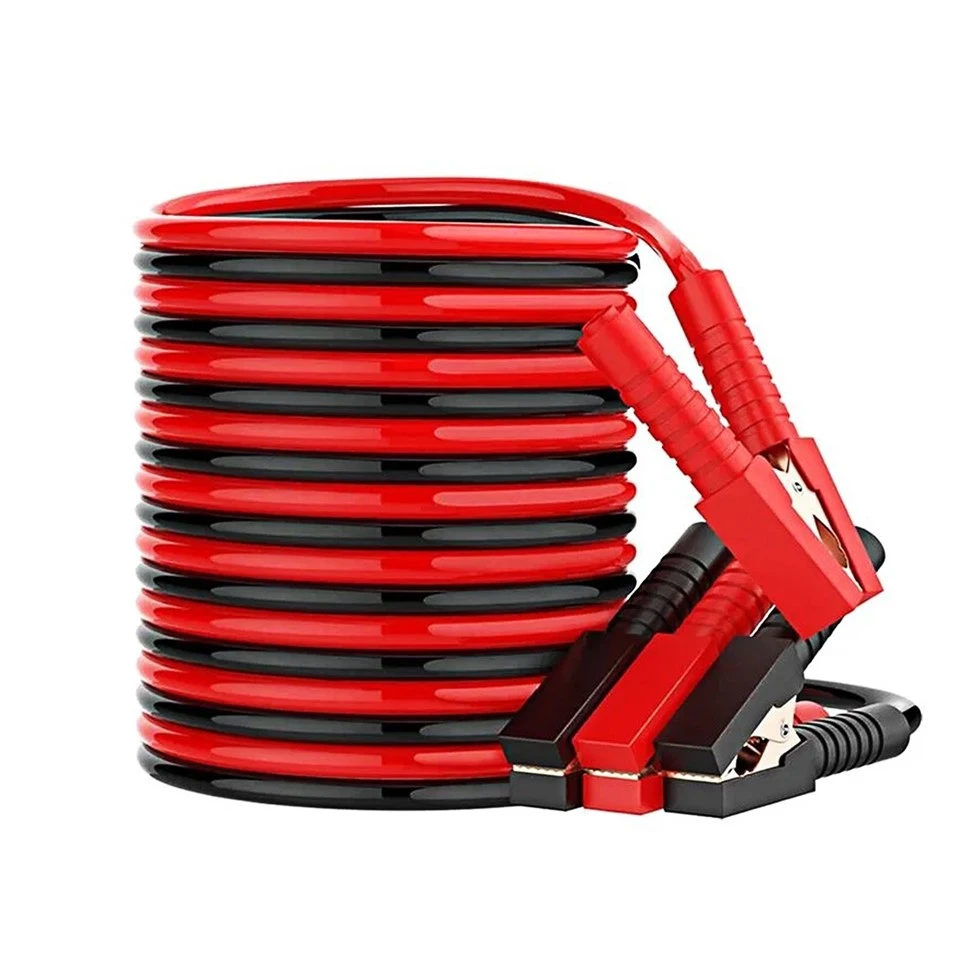
First off, let's understand how automotive battery jumper cables work. These cables are basically conductors that transfer electrical energy from a charged battery to a dead or weak one. They usually have thick copper wires inside a protective insulation, and at each end, there are clamps that attach to the battery terminals. When you connect the positive and negative terminals correctly between the two batteries, the electrical current flows, and hopefully, your car starts up.
Now, salt water is a whole different ballgame. Salt water is a good conductor of electricity because it contains ions (charged particles). When you dissolve salt in water, it breaks down into sodium ions (Na+) and chloride ions (Cl -). These ions can carry an electric charge, which is why salt water can conduct electricity better than pure water.
So, in theory, automotive battery jumper cables should work in salt - water environments because the salt water can help conduct the electrical current. But here's the catch. Salt water is also extremely corrosive. The metal parts of the jumper cables, like the clamps and the copper wires inside, are at risk of corrosion when they come into contact with salt water.

Corrosion is a chemical reaction that occurs when metal reacts with oxygen and other substances in the environment. In the case of salt water, the chloride ions in the water can accelerate this process. When the metal corrodes, it forms a layer of rust or other compounds on the surface. This layer can increase the resistance of the cable, which means that less electrical current can flow through it.
Let's say you're trying to jump - start a car in a salt - water environment. If the jumper cables have been exposed to salt water for a while, the corrosion on the clamps might prevent them from making a good connection with the battery terminals. And even if the connection seems okay on the outside, the corrosion inside the cable can reduce the efficiency of the electrical transfer.
Another problem is that the insulation on the jumper cables can also be damaged by salt water. The salt can break down the protective coating, exposing the copper wires inside. Once the wires are exposed, they're even more vulnerable to corrosion, and there's also a risk of short - circuits.
However, not all hope is lost. Some high - quality automotive battery jumper cables are designed to be more resistant to corrosion. These cables often have special coatings on the clamps and the wires to protect them from the harsh effects of salt water. For example, some clamps are made of stainless steel or have a zinc coating, which can resist corrosion better than regular steel.
If you're in a situation where you need to use jumper cables in a salt - water environment, there are a few things you can do to minimize the damage. First, try to keep the cables as dry as possible. If they do get wet, rinse them off with fresh water as soon as you can. This will help remove the salt and reduce the risk of corrosion.
Also, make sure to inspect the cables regularly for any signs of damage or corrosion. If you notice any rust on the clamps or if the insulation looks worn, it might be time to replace the cables.
Now, let's talk about some of the products we offer as a supplier. We have a wide range of automotive battery jumper cables to suit different needs. If you're looking for the best price, check out our Car Jump Start Cable Price. Here, you can find cables that offer great value for money without compromising on quality.
For those of you who need heavy - duty cables for trucks or other large vehicles, our Best Heavy Duty Jumper Cables for Trucks are the way to go. These cables are designed to handle high - current loads and are more resistant to wear and tear.
And if you're looking for something more convenient, our Jumper Cables Portable Battery Charger is a great option. It combines the functionality of jumper cables with a portable battery charger, so you can jump - start your car even when there's no other vehicle around.
In conclusion, while automotive battery jumper cables can technically work in salt - water environments, the corrosive nature of salt water poses significant challenges. But with the right cables and proper maintenance, you can still use them effectively. If you have any questions about our products or need advice on choosing the right jumper cables for your situation, don't hesitate to reach out. We're here to help you keep your car running smoothly, no matter what the environment throws at you. So, if you're interested in purchasing our automotive battery jumper cables, just drop us a line, and we can start the procurement discussion.
References
- "Corrosion of Metals in Salt Water" - Journal of Electrochemical Science
- "Electrical Conductivity of Salt Water" - Physics Today Magazine
- "Automotive Battery Jumper Cables: Design and Function" - Car Mechanics Quarterly