

As a supplier of automotive battery jumper cables, I often receive inquiries from customers about the performance of our products in various environments. One question that comes up frequently is whether automotive battery jumper cables work in high - altitude areas. In this blog, I'll delve into the science behind it and provide you with a comprehensive answer.
Understanding the Basics of Jumper Cables
Before we discuss high - altitude performance, let's briefly understand how automotive battery jumper cables work. Jumper cables are essentially conductors that transfer electrical energy from a charged battery to a depleted one. They are made of thick, conductive wires, usually copper, covered with insulation. The cables come with clamps at each end that are attached to the positive and negative terminals of the batteries. When properly connected, the electrical current flows from the good battery to the dead one, allowing the vehicle with the dead battery to start.
Factors Affecting Jumper Cable Performance at High Altitudes
Air Density and Electrical Conductivity
One of the most significant differences at high altitudes is the lower air density. Air is an insulator, and in normal conditions, it helps to prevent electrical arcing. At high altitudes, with less air to act as an insulator, there is a slightly higher risk of electrical arcing between the cable clamps and the battery terminals. However, modern automotive battery jumper cables are designed with insulation that can withstand normal electrical stresses, including those potentially caused by the reduced air density. As long as the cables are in good condition and properly installed, the risk of arcing is minimal.
Temperature Variations
High - altitude areas often experience more significant temperature variations compared to lower altitudes. Cold temperatures can have a negative impact on battery performance. Batteries produce less power in cold weather because the chemical reactions inside the battery slow down. This means that the charged battery used for jump - starting may have less available power. However, our Jumper Cables Portable Battery Charger is designed to work efficiently in a wide range of temperatures. The cables are made of high - quality materials that maintain their conductivity even in cold conditions, ensuring a reliable transfer of electrical energy.
Oxygen Levels
Another aspect of high - altitude environments is the lower oxygen levels. While oxygen doesn't directly affect the operation of jumper cables, it can impact the engine's combustion process. A vehicle with a depleted battery may have more difficulty starting at high altitudes due to the reduced oxygen available for combustion. But this is an issue related to the engine, not the jumper cables themselves. The cables will still transfer the electrical energy from the charged battery to the dead one just as effectively as they would at lower altitudes.
Testing Our Jumper Cables at High Altitudes
To ensure the performance of our products in high - altitude areas, we conduct extensive testing. We take our Best Portable Jumper Cables to high - altitude locations and test them under real - world conditions. We connect the cables to different types of vehicles, including cars, trucks, and SUVs, and measure the electrical transfer efficiency.

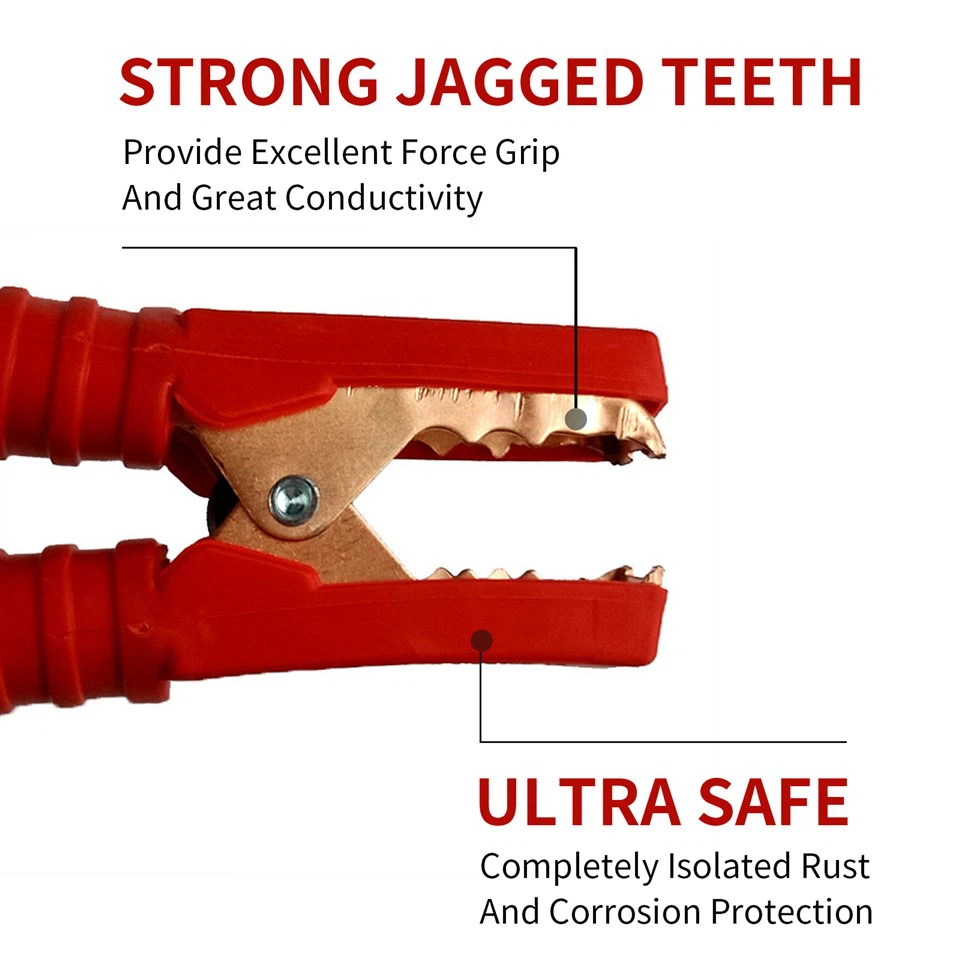
Our tests have shown that our jumper cables perform consistently well at high altitudes. The cables are able to transfer the necessary electrical current to start the vehicles, even in cold temperatures and low - oxygen environments. The insulation on the cables remains intact, preventing any electrical arcing or short - circuits.
Benefits of Our High - Quality Jumper Cables for High - Altitude Use
Durability
Our jumper cables are built to last. The copper wires inside the cables are thick and highly conductive, and the insulation is made of high - quality materials that can withstand the harsh conditions of high - altitude environments. Whether it's the cold temperatures, the UV radiation, or the occasional abrasion, our cables are designed to keep working.
Versatility
We offer a range of jumper cables suitable for different types of vehicles. Our Best Heavy Duty Jumper Cables for Trucks are specifically designed to handle the higher power requirements of trucks and large vehicles. These cables can be used at high altitudes just as effectively as in low - altitude areas, providing a reliable solution for jump - starting any vehicle.
Safety Features
Safety is our top priority. All our jumper cables come with safety features such as color - coded clamps to ensure proper connection and built - in fuses to prevent over - current. These features are especially important in high - altitude areas where the conditions can be more challenging.
Conclusion
In conclusion, automotive battery jumper cables do work in high - altitude areas. While there are some environmental factors such as lower air density, temperature variations, and lower oxygen levels, our high - quality jumper cables are designed to overcome these challenges. Through extensive testing, we have proven that our cables can provide a reliable and safe solution for jump - starting vehicles in high - altitude environments.
If you're in need of high - quality automotive battery jumper cables, whether for use in high - altitude areas or anywhere else, we are here to help. We offer a wide range of products to meet your specific needs. Don't hesitate to contact us for more information or to discuss your purchasing requirements. We look forward to partnering with you to ensure your vehicles are always ready to go.
References
- Battery Technology: Principles and Applications, John Wiley & Sons
- Automotive Electrical Systems Handbook, McGraw - Hill Education