

In the automotive world, battery jumper cables are indispensable tools. They provide a quick and practical solution when a vehicle's battery runs out of power. As a supplier of automotive battery jumper cables, I often encounter various questions from customers. One question that has piqued my interest recently is whether there are any noise - reduction features in automotive battery jumper cables.
The Basics of Automotive Battery Jumper Cables
Before delving into the topic of noise reduction, let's first understand the basic function of automotive battery jumper cables. These cables are designed to transfer electrical energy from a charged battery to a depleted one. They typically consist of two insulated conductors, usually made of copper, with large - gauge wires to ensure efficient current flow. At each end of the cables, there are metal clamps, often made of steel or copper - alloy, which securely attach to the battery terminals.
The primary purpose of jumper cables is to start a vehicle with a dead battery by using the power from a live battery. When the clamps are correctly attached to the positive and negative terminals of both batteries, the electrical current flows from the charged battery through the cables to the dead battery, providing the necessary power to start the engine.
Noise in the Context of Jumper Cables
When we talk about noise in relation to automotive battery jumper cables, we are not referring to audible sound. Instead, we are talking about electrical noise. Electrical noise is unwanted electrical signals that can interfere with the normal operation of electrical systems. In the case of jumper cables, electrical noise can be generated due to several factors.

One of the main sources of electrical noise is electromagnetic interference (EMI). EMI occurs when electrical currents generate electromagnetic fields that can disrupt the operation of other electrical components. For example, the flow of high - current through the jumper cables can create strong electromagnetic fields. These fields can induce unwanted currents in nearby electrical circuits, such as the vehicle's radio, dashboard electronics, or engine control unit (ECU).
Another source of electrical noise is poor contact at the battery terminals. If the clamps do not make a good connection with the battery terminals, it can lead to intermittent current flow, which in turn can generate electrical noise. Loose or corroded terminals can also cause arcing, which is a significant source of electrical noise.
Noise - Reduction Features in Jumper Cables
Shielding
One of the most effective ways to reduce electrical noise in jumper cables is through shielding. Shielding involves wrapping the conductors with a conductive material, such as aluminum foil or braided copper. The shield acts as a barrier, preventing the electromagnetic fields generated by the current - carrying conductors from radiating outwards and interfering with other electrical components.
Shielded jumper cables are especially useful in modern vehicles, which are equipped with a large number of sensitive electronic systems. By reducing EMI, shielded cables can help prevent interference with the vehicle's radio reception, navigation system, and other electronic devices. For those interested in high - quality shielded jumper cables, you can check out Best Heavy Duty Jumper Cables for Trucks. These cables are designed to handle high - current applications while minimizing electrical noise.
High - Quality Conductors
The quality of the conductors used in jumper cables also plays a crucial role in noise reduction. High - purity copper conductors have lower resistance compared to lower - quality materials. Lower resistance means that there is less energy loss in the form of heat, and the current can flow more smoothly. This smooth current flow reduces the likelihood of generating electrical noise.
In addition, larger - gauge conductors can also help reduce noise. A larger gauge means that the wire has a greater cross - sectional area, which allows for more current to flow with less resistance. As a result, the electrical signals are more stable, and the chances of generating electrical noise are reduced. Jumper Cables Portable Battery Charger often uses high - quality, large - gauge conductors to ensure efficient and noise - free operation.
Quality Clamps
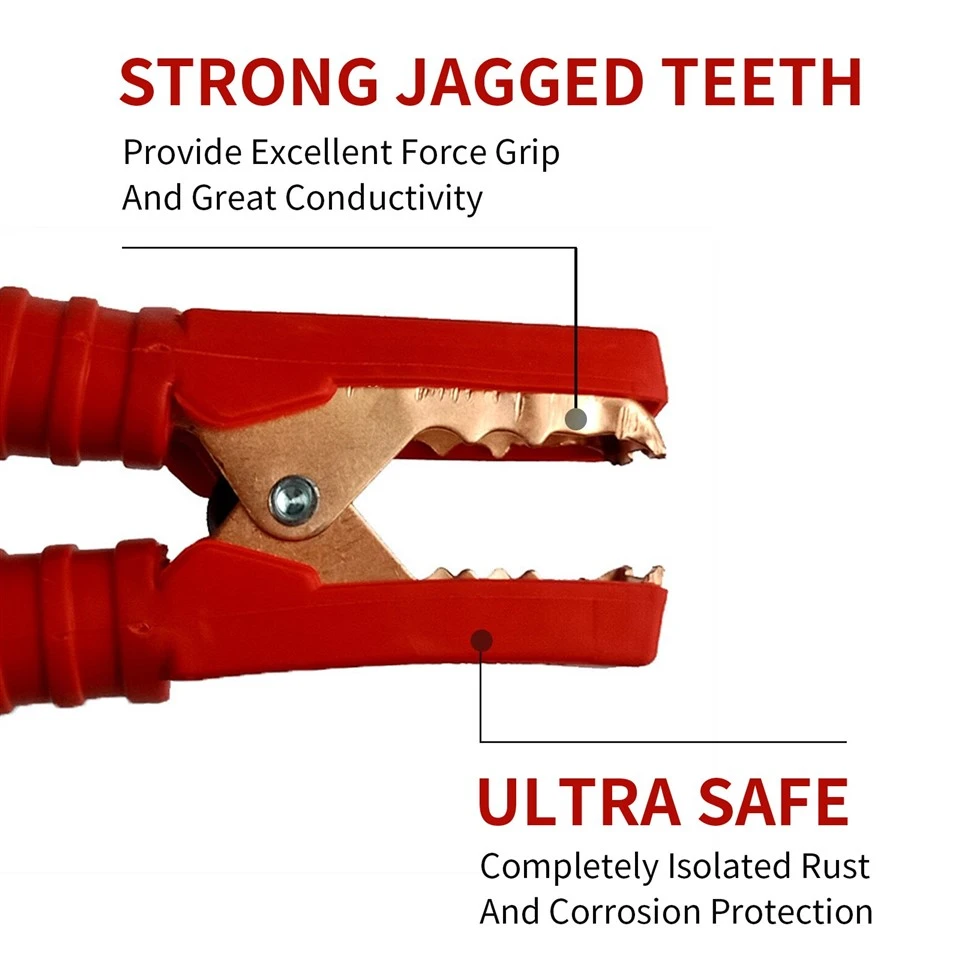
The clamps on the jumper cables are another important factor in noise reduction. High - quality clamps are designed to make a tight and secure connection with the battery terminals. A good connection ensures that the current flows smoothly without any interruptions or arcing.
Clamps made of high - quality materials, such as copper - alloy, are more resistant to corrosion and can maintain a good connection over time. Some clamps also have special features, such as serrated teeth, which can penetrate through any corrosion on the battery terminals to make a better electrical contact. This reduces the chances of generating electrical noise due to poor contact. Best Portable Jumper Cables are equipped with high - quality clamps that are designed to provide a reliable and noise - free connection.
Benefits of Noise - Reduction Features
The presence of noise - reduction features in automotive battery jumper cables offers several benefits. Firstly, it helps protect the vehicle's sensitive electronic systems. By reducing electrical noise, the risk of interference with the radio, navigation system, and ECU is minimized. This ensures that these systems can operate normally during the jump - starting process.
Secondly, noise - reduction features can improve the overall performance of the jumper cables. A smoother current flow means that the power transfer from the charged battery to the dead battery is more efficient. This can result in a quicker and more reliable start for the vehicle with the dead battery.
Finally, it enhances the user experience. When using jumper cables, users do not have to worry about potential damage to their vehicle's electronics or interference with the normal operation of their vehicle. This gives them peace of mind and makes the jump - starting process more convenient.
Conclusion
In conclusion, there are indeed noise - reduction features in automotive battery jumper cables. Shielding, high - quality conductors, and well - designed clamps all contribute to reducing electrical noise. As a supplier of automotive battery jumper cables, we understand the importance of these features in providing a reliable and safe product.
If you are in the market for automotive battery jumper cables, whether for personal use or for your business, we have a wide range of products that incorporate these noise - reduction features. We are committed to providing high - quality products that meet the needs of our customers. If you are interested in learning more about our products or would like to discuss a potential purchase, please feel free to contact us for a procurement negotiation.
References
- Automotive Electrical Systems Handbook, Third Edition by John F. Kershaw
- Electrical Engineering for Non - Electrical Engineers by Ronald A. Schmitt