

Hey there! As a supplier of rubber power cords, I often get asked about the signal transmission quality of these cords. It's a crucial aspect, especially in today's tech - driven world where a stable and efficient signal is a must. So, let's dive right in and explore what affects the signal transmission quality of a rubber power cord.
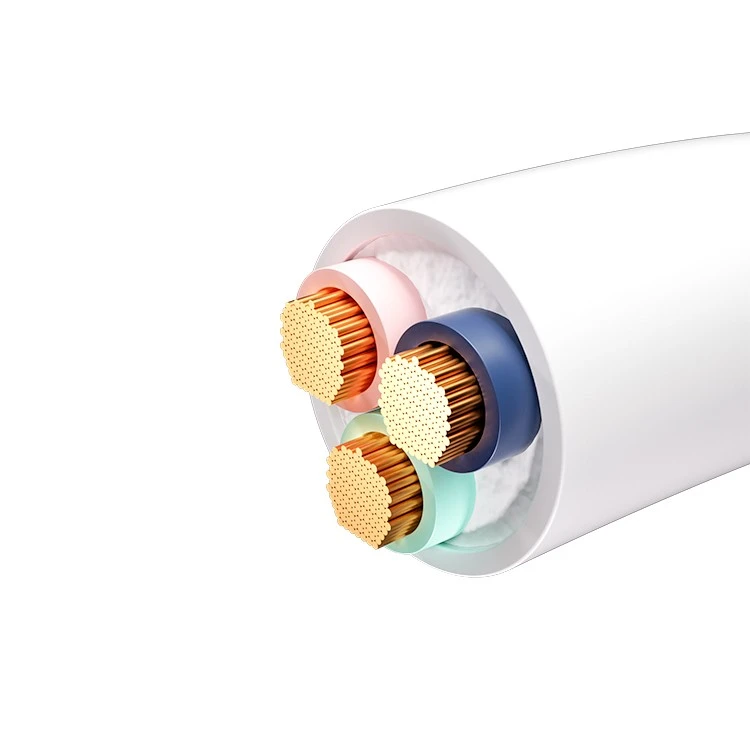
First off, let's talk about the basic components of a rubber power cord. A typical rubber power cord consists of conductors, insulation, and a rubber outer sheath. The conductors are usually made of copper or aluminum. Copper is the more popular choice because it's an excellent conductor of electricity. It has low resistance, which means less energy is lost as heat during the transmission of electrical signals. When the resistance is low, the signal can travel more efficiently from the power source to the device. For instance, in a YC Rubber Power Cord, high - quality copper conductors are used to ensure optimal signal transmission.
The insulation around the conductors is also super important. It prevents the electrical signals from leaking out and causing short - circuits or interference. Rubber is a great material for insulation because it's flexible, durable, and has good dielectric properties. A good insulation material should have a high dielectric strength, which means it can withstand high voltages without breaking down. This is crucial for maintaining the integrity of the electrical signal. If the insulation is poor, the signal can be disrupted, leading to power fluctuations or even damage to the connected devices.
Now, let's consider the design and construction of the rubber power cord. The way the conductors are arranged inside the cord can have a big impact on signal transmission. In some cords, the conductors are twisted together. This twisting helps to reduce electromagnetic interference (EMI). EMI can be caused by nearby electrical devices or radio waves. When the conductors are twisted, the magnetic fields generated by the electrical current in each conductor tend to cancel each other out, reducing the overall EMI. For example, in a China Factory YC Rubber Extension Lead, the conductors are carefully twisted to minimize interference and ensure a clean signal.
The length of the rubber power cord is another factor. Longer cords generally have higher resistance, which can lead to a drop in voltage and a reduction in signal strength. When the voltage drops, the device may not receive enough power to function properly. To counter this, thicker conductors can be used in longer cords. Thicker conductors have lower resistance, so they can carry the electrical signal more efficiently over longer distances. However, this also increases the cost and the bulkiness of the cord.
The quality of the manufacturing process also plays a huge role. A well - made rubber power cord will have consistent conductor diameters, proper insulation thickness, and a tight outer sheath. Any irregularities in the manufacturing can lead to signal degradation. For example, if there are air bubbles in the insulation or if the conductors are damaged during the manufacturing process, the signal transmission quality will be affected.
Environmental factors can't be ignored either. Extreme temperatures, moisture, and chemicals can all have a negative impact on the rubber power cord and its signal transmission quality. High temperatures can cause the rubber to degrade, making it less effective as an insulator. Moisture can seep into the cord and cause corrosion of the conductors, increasing the resistance. Chemicals can also damage the rubber and the conductors. That's why it's important to choose a rubber power cord that is designed to withstand the specific environmental conditions it will be exposed to. A China Factory Rubber Extension Lead is often engineered to be resistant to various environmental factors, ensuring reliable signal transmission in different settings.
In terms of testing, reliable rubber power cord suppliers conduct a series of tests to ensure the signal transmission quality. These tests include measuring the resistance of the conductors, checking the dielectric strength of the insulation, and testing for EMI. By performing these tests, suppliers can identify any potential issues and make sure that the cords meet the required standards.
When it comes to applications, different devices have different requirements for signal transmission quality. For example, sensitive electronic devices like computers and audio equipment need a very stable and clean power supply. A small fluctuation in the electrical signal can cause glitches or even permanent damage to these devices. On the other hand, less sensitive devices like some household appliances can tolerate a certain degree of signal variation.
As a rubber power cord supplier, we understand the importance of providing high - quality cords with excellent signal transmission. We use the best materials, advanced manufacturing techniques, and rigorous testing procedures to ensure that our cords meet the highest standards. Whether you need a cord for a small household device or a large industrial application, we have the right solution for you.
If you're in the market for rubber power cords and want to ensure top - notch signal transmission quality, don't hesitate to reach out. We're here to help you find the perfect cord for your needs. Whether it's a YC Rubber Power Cord, a China Factory YC Rubber Extension Lead, or a China Factory Rubber Extension Lead, we can offer you high - quality products at competitive prices. Let's start a conversation about your requirements and see how we can assist you.

References:
- Electrical Engineering Handbook, Third Edition, edited by Richard C. Dorf
- Handbook of Electronic and Electrical Technology, Fourth Edition, by John Bird