

Hey there, fellow car enthusiasts! As a supplier of automotive battery jumper cables, I've been getting a ton of questions lately about how cable length affects the performance of these essential tools. So, I thought I'd take a deep dive into this topic and share my insights with you all.
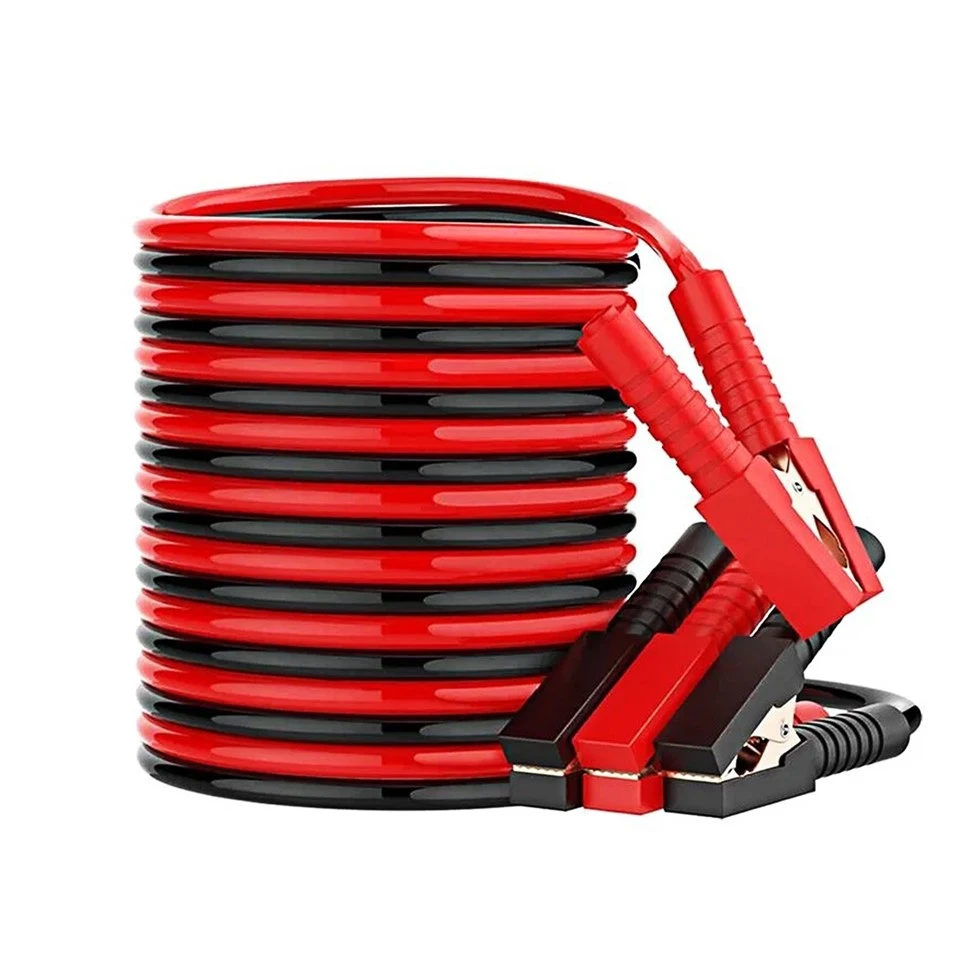
Let's start by understanding the basics. Automotive battery jumper cables are used to transfer electrical energy from a charged battery to a dead or weak battery. This allows you to start a vehicle with a flat battery. The performance of these cables is crucial, as it directly impacts how effectively they can transfer power.
One of the most significant factors that can influence the performance of jumper cables is their length. At first glance, you might think that a longer cable gives you more flexibility. You can position the donor and recipient vehicles further apart, which can be handy in tight spaces or when the batteries are located in awkward positions. However, there's a trade - off when it comes to performance.
Resistance and Voltage Drop
The key issue with longer cables is electrical resistance. Every conductor, including the copper wires inside jumper cables, has some level of resistance. Resistance is a property that opposes the flow of electric current. According to Ohm's Law (V = IR, where V is voltage, I is current, and R is resistance), when current flows through a cable with resistance, there is a voltage drop.
A longer cable has more length of conductor, which means it has higher resistance compared to a shorter cable of the same gauge. As the current flows through the longer cable, more voltage is lost along the way. This voltage drop can have a significant impact on the performance of the jumper cables.
When you're trying to jump - start a vehicle, the battery needs a certain amount of voltage to crank the engine. If there's a large voltage drop in the jumper cables, the voltage reaching the dead battery may not be sufficient to start the engine. This can lead to slow cranking or, in some cases, the engine not starting at all.
For example, let's say you have a set of jumper cables with a relatively thin gauge and a length of 20 feet. When you try to transfer a high current from a donor battery to a dead battery, the resistance in the long cable will cause a substantial voltage drop. The dead battery might not receive enough power, and you'll be left scratching your head wondering why the engine won't start.
Gauge and Length Relationship
The gauge of the jumper cables also plays a crucial role in how length affects performance. The gauge refers to the thickness of the copper wires inside the cables. A lower gauge number means a thicker wire, which has lower resistance.
If you have a thick - gauge cable, it can handle a longer length with less of an impact on performance compared to a thin - gauge cable. For instance, a 4 - gauge cable can be longer without experiencing as much voltage drop as a 10 - gauge cable of the same length.
When choosing jumper cables, you need to consider both the length and the gauge. If you need a longer cable for more flexibility, it's a good idea to go for a lower - gauge (thicker) cable. This way, you can minimize the voltage drop and ensure that the cables perform well.
Impact on Different Vehicle Types
The impact of cable length can vary depending on the type of vehicle you're trying to jump - start. For smaller cars with relatively small engines, a longer cable might not cause as many problems. Smaller engines require less current to start, so the voltage drop in a longer cable may still leave enough voltage to crank the engine.
However, when it comes to trucks and larger vehicles with big engines, the situation is different. These vehicles need a large amount of current to start, and any voltage drop in the jumper cables can be a real issue. A long, thin - gauge cable may not be able to supply enough power to start a truck's engine. That's why heavy - duty vehicles often require thick - gauge, shorter cables to ensure reliable jump - starting.
If you're in the market for heavy - duty jumper cables for trucks, I'd recommend checking out Best Heavy Duty Jumper Cables for Trucks. These cables are designed to handle the high current requirements of large engines and minimize the effects of voltage drop.
Practical Considerations
In real - world scenarios, you need to strike a balance between the length you need and the performance you require. If you're mainly using the jumper cables in your driveway or a small parking lot, a shorter cable might be sufficient. You can get a cable that's around 6 - 8 feet long, which will have lower resistance and better performance.
On the other hand, if you work in a large automotive repair shop or need to jump - start vehicles in various locations, a longer cable can be more convenient. Just make sure to choose a cable with a thick enough gauge to compensate for the increased length.
Another thing to consider is the quality of the cable. High - quality cables are made with better - quality copper and have proper insulation. This can also help reduce resistance and improve performance, regardless of the length.
Our Product Range
As a supplier of automotive battery jumper cables, we offer a wide range of products to meet different needs. We have Jumper Cables Portable Battery Charger, which combines the functionality of jumper cables with a portable battery charger. These are great for on - the - go situations where you might not have access to another vehicle's battery.
We also have Heavy Duty Car Battery Jumper options for those who need to jump - start larger vehicles. Our heavy - duty cables are made with thick - gauge copper wires to minimize resistance and ensure reliable performance.
Conclusion
In conclusion, cable length has a significant impact on the performance of automotive battery jumper cables. Longer cables have higher resistance, which leads to voltage drop and can affect the ability to start a vehicle. However, by choosing the right gauge and high - quality cables, you can mitigate these issues.
If you're in the market for automotive battery jumper cables, whether it's a short cable for everyday use or a long cable for more flexibility, we've got you covered. We're here to provide you with the best products that offer a balance between convenience and performance.

If you're interested in learning more about our products or have any questions about choosing the right jumper cables for your needs, don't hesitate to get in touch with us. We're always happy to assist you with your procurement and answer any technical questions you might have. Start sourcing the best automotive battery jumper cables today and ensure you're always prepared for a dead battery situation.
References
- Physics textbooks on electricity and magnetism, which cover Ohm's Law and electrical resistance.
- Automotive repair manuals that discuss jump - starting procedures and the importance of proper jumper cable use.