

When it comes to electrical power cords, one of the most common decisions consumers face is choosing between flat and round cords. As an experienced electrical power cord supplier, I've witnessed firsthand the diverse needs and preferences of customers. In this blog, I'll delve into the differences between flat and round electrical power cords, helping you make an informed decision for your specific requirements.
Physical Design and Appearance
The most obvious difference between flat and round electrical power cords lies in their physical design. Round cords, as the name suggests, have a circular cross - section. This shape is a traditional design that has been used for decades. The circular shape gives the cord a more three - dimensional and robust appearance. It often has a more substantial feel in the hand, which can sometimes be associated with a sense of durability.
On the other hand, flat cords have a rectangular or oval cross - section that is much thinner and wider compared to round cords. They are typically flatter and more streamlined in appearance. Flat cords are often considered more aesthetically pleasing in modern settings because they can be easily hidden under rugs, along baseboards, or behind furniture. For example, in a home office where cable management is crucial for a clean and organized look, a flat cord can blend in seamlessly without creating an unsightly mess of cables.
Flexibility and Bend Radius
Flexibility is an important factor when considering electrical power cords. Round cords generally have a better natural flexibility. Their circular shape allows them to bend in multiple directions without significant resistance. This makes them ideal for applications where the cord needs to be moved around frequently or bent at various angles. For instance, in a workshop environment where power tools are constantly being repositioned, a round cord can be easily adjusted to reach different work areas without kinking or breaking.
Flat cords, however, have a more limited bend radius. They are designed to be flexible mainly in one direction, usually along the length of the flat side. While they can still be bent, sharp bends can cause damage to the internal conductors over time. But in some cases, this limited flexibility can be an advantage. For example, when running a cord along a straight path, a flat cord can maintain its shape better and is less likely to curl up or get tangled.
Durability and Resistance
Durability is a key consideration for any electrical power cord. Round cords are often more durable in harsh environments. The outer insulation of a round cord provides a more uniform layer of protection around the internal conductors. This can make them more resistant to abrasion, impact, and general wear and tear. In industrial settings where cords may be dragged across rough surfaces or exposed to heavy machinery, round cords are a popular choice. They are also better at withstanding extreme temperatures. The circular design allows for better heat dissipation, reducing the risk of overheating and damage to the cord.

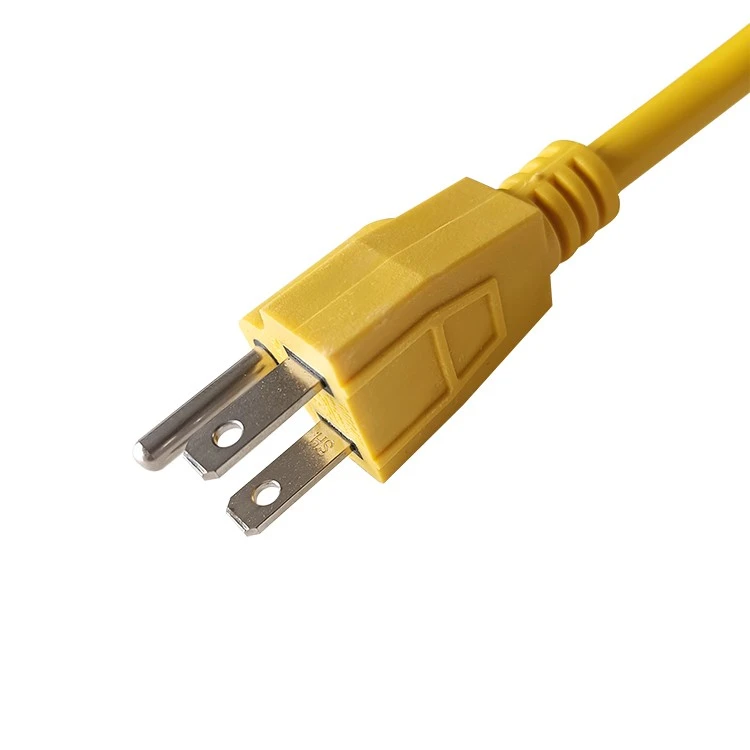
Flat cords, while generally less durable in extreme conditions, can still be quite robust. The flat design can make them more resistant to being stepped on or crushed compared to round cords. Since they are wider and flatter, the force is distributed over a larger area, reducing the likelihood of damage to the internal conductors. However, they may be more susceptible to damage from sharp objects or being caught in tight spaces.
Installation and Storage
Installation of electrical power cords can vary depending on the type. Round cords can be a bit more challenging to install in tight spaces. Their circular shape takes up more space, and they can be difficult to route through narrow channels or behind thin furniture. However, they are easier to connect to devices as the plug and socket alignment is more straightforward due to the symmetrical shape.
Flat cords, on the other hand, are much easier to install in confined areas. Their thin profile allows them to fit into small gaps and can be easily taped or stapled in place. This makes them a great choice for DIY projects or for adding additional power outlets in hard - to - reach places. In terms of storage, flat cords are more compact and can be easily rolled up or folded without taking up much space. They are also less likely to get tangled during storage compared to round cords.
Electrical Performance
From an electrical performance perspective, both flat and round cords can carry the same amount of electrical current if they are of the same gauge. However, the way the conductors are arranged can affect the electrical properties. In round cords, the conductors are typically arranged in a circular pattern, which can provide more balanced electrical flow. This can result in less electrical interference and better overall performance, especially for high - power applications.
Flat cords have conductors that are arranged in a flat configuration. While this can still provide efficient electrical transmission, there may be a slightly higher risk of electrical interference in some cases. However, modern flat cord designs have been improved to minimize these issues, and they are perfectly suitable for most household and commercial applications.
Cost
Cost is always a factor in purchasing decisions. Generally, round cords tend to be more expensive than flat cords. The manufacturing process for round cords is often more complex, involving multiple layers of insulation and a more precise arrangement of conductors. Additionally, the materials used for round cords may be of higher quality to ensure durability and performance.
Flat cords, on the other hand, are more cost - effective. They require less material and a simpler manufacturing process, which translates to a lower price point. This makes them a popular choice for budget - conscious consumers or for applications where a large number of cords are needed, such as in a multi - outlet power strip.
Applications
The choice between flat and round electrical power cords also depends on the specific application. For home use, flat cords are great for everyday appliances and electronics. They are ideal for lamps, televisions, and small kitchen appliances where cable management is important. You can find a wide range of flat cords in our All Kinds Of Electrical Power Cord collection.
Round cords are more commonly used in industrial and commercial settings. They are suitable for high - power equipment such as industrial machinery, power tools, and large appliances. Our 12 Gauge Appliance Extension Cord is a great example of a round cord designed for heavy - duty applications.
For outdoor use, round cords are often preferred due to their better resistance to environmental factors such as moisture, sunlight, and temperature extremes. However, if you need a cord for a temporary outdoor setup where appearance is a concern, a flat cord with proper outdoor - rated insulation can also be a viable option.
If you're looking for the best power extension cord for your specific needs, whether it's a flat or round cord, check out our Best Power Extension Cord selection.
Conclusion
In conclusion, both flat and round electrical power cords have their own unique advantages and disadvantages. The choice between the two depends on a variety of factors, including physical design preferences, flexibility requirements, durability needs, installation and storage considerations, electrical performance, cost, and the specific application. As an electrical power cord supplier, I understand that every customer has different needs, and I'm here to help you find the perfect cord for your situation.
If you're interested in purchasing electrical power cords for your home, business, or industrial use, I encourage you to contact us for a detailed discussion about your requirements. We can provide you with expert advice, product samples, and competitive pricing. Let's work together to ensure you have the right electrical power cords for your projects.
References
- Electrical Wiring Handbook, McGraw - Hill
- National Electrical Code (NEC) Standards