

Hey there! As an electrical power cord supplier, I've seen firsthand how crucial proper labeling is. It's not just about slapping some words on a cord; it's about ensuring safety, compliance, and clear communication. So, let's dive into what the standards for electrical power cord labeling are.
Voltage and Amperage Ratings
One of the most important aspects of power cord labeling is indicating the voltage and amperage ratings. This tells users how much electrical power the cord can handle safely. For example, a cord labeled "125V, 15A" can handle a maximum voltage of 125 volts and a maximum current of 15 amperes. It's super important to get these ratings right because using a cord with a lower rating than required can lead to overheating, which is a major fire hazard.
At our company, we make sure all our cords are accurately labeled with the correct voltage and amperage ratings. Whether it's a 12 Gauge Appliance Extension Cord or a Short Appliance Extension Cord, you can trust that the labeling reflects the cord's capabilities.
Wire Gauge
Another key factor in power cord labeling is the wire gauge. The wire gauge refers to the thickness of the wire inside the cord. Thicker wires (lower gauge numbers) can carry more current without overheating. For instance, a 12-gauge wire can handle more amperage than a 16-gauge wire.

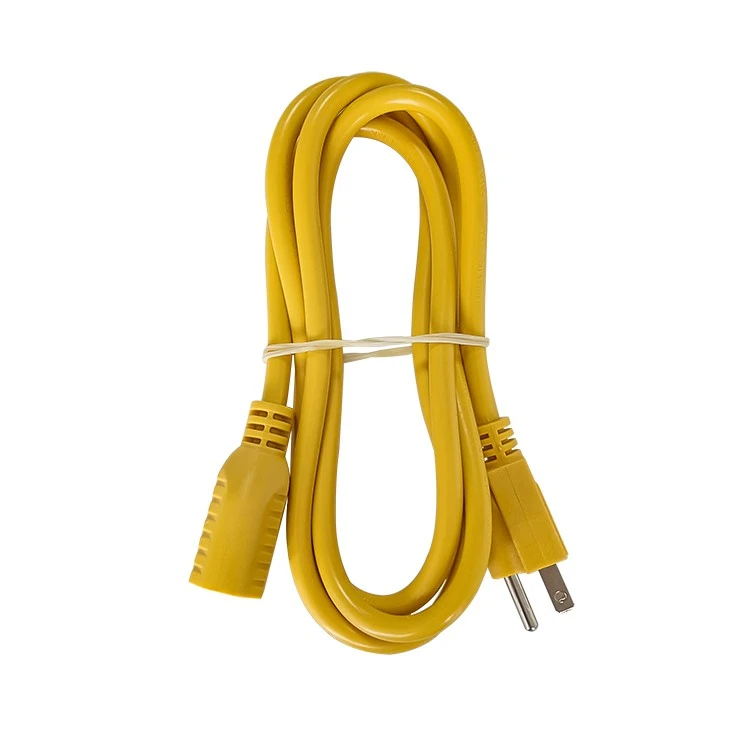
When you see a cord labeled with its wire gauge, it gives you an idea of how much power it can safely transmit. This is especially important when using high-power appliances or devices. Our Portable Generator Extension Cords are often used with high-power generators, so we always label them with the appropriate wire gauge to ensure safe and efficient operation.
Insulation Type
The type of insulation used on a power cord is also an important consideration. Different types of insulation have different properties, such as resistance to heat, chemicals, and abrasion. For example, cords used in industrial settings may require insulation that can withstand harsh chemicals or extreme temperatures.
On our labels, we indicate the type of insulation used on the cord. This helps customers choose the right cord for their specific application. Whether it's a cord for indoor use or one that needs to be more durable for outdoor or industrial use, the insulation type is clearly marked.
Safety Certifications
Safety certifications are a big deal when it comes to power cord labeling. Certifications like UL (Underwriters Laboratories) or ETL (Intertek) indicate that the cord has been tested and meets certain safety standards. These certifications give customers peace of mind knowing that the cord they're using has been rigorously tested for safety.
All our power cords are tested and certified by recognized safety organizations. The labels on our cords clearly display these certifications, so you can be confident that you're getting a safe and reliable product.
Country-Specific Requirements
Different countries may have their own specific requirements for power cord labeling. For example, in the United States, cords must comply with the National Electrical Code (NEC). In Europe, they need to meet the standards set by the International Electrotechnical Commission (IEC).
As a supplier, we make sure to stay up-to-date with all the relevant country-specific requirements. Our labels are designed to meet the labeling standards of the countries where our products are sold. This ensures that our customers can use our cords legally and safely, no matter where they are.
Color Coding
Color coding can also be used in power cord labeling to provide additional information. For example, different colors may be used to indicate different wire functions or to distinguish between cords with different ratings.
We sometimes use color coding on our cords to make it easier for customers to identify the right cord for their needs. It's just another way we try to make the labeling as clear and user-friendly as possible.
Length
The length of the power cord is another important piece of information that should be labeled. Knowing the length of the cord is crucial, especially when planning the layout of electrical devices or when determining if the cord will reach the intended outlet.
On our labels, we clearly state the length of the cord. Whether you need a short cord for a small appliance or a long cord for a larger setup, you can easily find the right length by looking at the label.
Manufacturer Information
Finally, the label should include information about the manufacturer. This includes the company name, contact information, and sometimes a website or customer service number. This allows customers to get in touch with the manufacturer if they have any questions or concerns about the product.
On our labels, you'll find all the necessary manufacturer information. We want our customers to be able to reach out to us easily if they need any support or have feedback about our products.
Why Proper Labeling Matters
Proper labeling of power cords is not just a matter of compliance; it's also about safety and customer satisfaction. When customers can easily understand the information on the label, they're more likely to use the cord correctly and safely. This reduces the risk of electrical accidents and ensures that the cord performs as expected.
As a supplier, we take pride in providing high-quality power cords with accurate and clear labeling. We know that our customers rely on us to provide them with safe and reliable products, and proper labeling is an important part of that.
Contact Us for Your Power Cord Needs
If you're in the market for electrical power cords, we'd love to hear from you. Whether you need a 12 Gauge Appliance Extension Cord, a Short Appliance Extension Cord, or a Portable Generator Extension Cords, we have a wide range of options to choose from.
Contact us today to discuss your power cord requirements. We're here to help you find the right cords for your needs and ensure that you get the best quality products at competitive prices.
References
- National Electrical Code (NEC)
- International Electrotechnical Commission (IEC) standards
- Underwriters Laboratories (UL) testing and certification guidelines
- Intertek (ETL) safety standards