

Electromagnetic fields (EMFs) are a fundamental aspect of the modern electrical infrastructure, and high-voltage power cables are significant sources of these fields. As a high-voltage power cable supplier, I am often asked about the nature of the electromagnetic fields generated by our products. In this blog, I will delve into the science behind these fields, their characteristics, and implications.
Understanding Electromagnetic Fields
Electromagnetic fields are a combination of electric and magnetic fields. Electric fields are produced by electric charges, whether they are stationary or in motion, while magnetic fields are generated by moving electric charges, such as electric currents. In the context of high-voltage power cables, both types of fields are present.
The electric field around a high-voltage power cable is directly related to the voltage carried by the cable. The higher the voltage, the stronger the electric field. This field exists in the space surrounding the cable and can be visualized as a region where electric forces act on other charged particles. The strength of the electric field decreases with increasing distance from the cable.
The magnetic field, on the other hand, is generated by the electric current flowing through the cable. According to Ampere's law, a magnetic field is created in a circular pattern around the conductor carrying the current. The strength of the magnetic field depends on the magnitude of the current. Similar to the electric field, the magnetic field strength also decreases as the distance from the cable increases.
Characteristics of EMFs Generated by High-Voltage Power Cables
The electromagnetic fields generated by high-voltage power cables have several distinct characteristics. Firstly, they are time-varying fields. In an alternating current (AC) power system, which is commonly used in high-voltage transmission, the direction and magnitude of the current change periodically. This results in the electric and magnetic fields also changing with time. The frequency of these changes is typically 50 or 60 Hz, depending on the region.
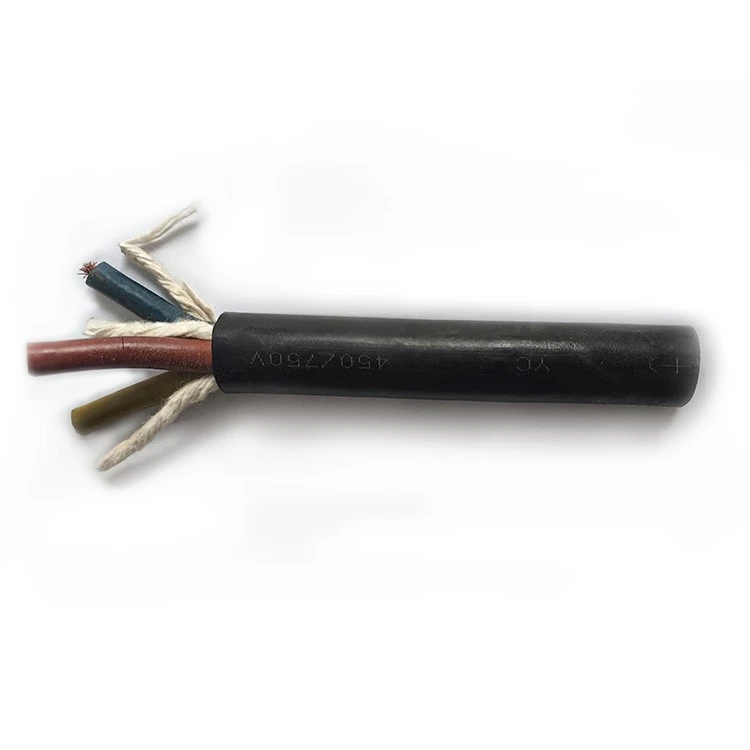
Secondly, the strength of the electromagnetic fields is influenced by various factors. The voltage level of the cable is a crucial determinant of the electric field strength. Higher voltage cables produce stronger electric fields. The current flowing through the cable affects the magnetic field strength. Additionally, the configuration of the cable, such as whether it is a single-core or multi-core cable, and the distance between the conductors within multi-core cables, can also impact the distribution and strength of the fields.
The distance from the cable is another important factor. As mentioned earlier, both the electric and magnetic field strengths decrease with increasing distance. This follows an inverse relationship, although the exact mathematical relationship is more complex and depends on the cable configuration and other factors.

Measuring Electromagnetic Fields
Measuring the electromagnetic fields generated by high-voltage power cables is essential for assessing their potential impact. Specialized instruments are used to measure the electric and magnetic field strengths. Electric field meters are designed to measure the electric field intensity in volts per meter (V/m), while magnetic field meters measure the magnetic field strength in amperes per meter (A/m) or in teslas (T).
When measuring the fields, it is important to take into account the variability of the fields. Since the fields are time-varying, measurements are often taken over a period of time to obtain an average value. The measurement location also matters. Measurements are typically taken at different distances from the cable and at various heights above the ground to get a comprehensive understanding of the field distribution.
Implications of Electromagnetic Fields
The presence of electromagnetic fields generated by high-voltage power cables has raised concerns about potential health effects. However, extensive research has been conducted to evaluate these concerns. The World Health Organization (WHO) has carried out comprehensive reviews of the scientific literature on the health effects of low-frequency electromagnetic fields, including those from power cables.
To date, there is no conclusive evidence to suggest that exposure to the electromagnetic fields from high-voltage power cables at typical environmental levels causes adverse health effects. The WHO has established guidelines for limiting exposure to electromagnetic fields to ensure public safety. These guidelines are based on the best available scientific knowledge and are designed to protect against any potential harmful effects.
In addition to health concerns, electromagnetic fields can also have implications for other electrical and electronic systems. For example, strong magnetic fields can interfere with the operation of sensitive electronic devices, such as pacemakers and some types of communication equipment. However, proper shielding and design techniques can be employed to minimize these interference effects.
Our High-Voltage Power Cables and EMFs
As a high-voltage power cable supplier, we are committed to ensuring that our products meet all relevant safety standards and regulations regarding electromagnetic fields. Our cables are designed and manufactured using advanced technologies to minimize the generation of electromagnetic fields while maintaining efficient power transmission.
We use high-quality insulation materials that help to reduce the electric field strength around the cables. Additionally, our cable designs optimize the conductor arrangement to minimize the magnetic field emissions. By using innovative engineering techniques, we are able to produce cables that not only deliver reliable power but also comply with strict electromagnetic field limits.
Types of High-Voltage Power Cables We Offer
We offer a wide range of high-voltage power cables to meet the diverse needs of our customers. Our High Tension Electric Cable is designed for high-voltage transmission applications. It is built with high-quality conductors and insulation materials to ensure efficient power transfer and long-term reliability.
Our Heavy Duty Power Cord High Voltage is suitable for applications where a durable and flexible power connection is required. These cords are designed to withstand high voltages and heavy loads, making them ideal for industrial and commercial use.
We also work closely with High Voltage Power Cable Manufacturers to source the best raw materials and components for our cables. This allows us to maintain the highest quality standards and offer our customers the best possible products.
Contact Us for Your High-Voltage Power Cable Needs
If you are in need of high-voltage power cables, we invite you to contact us for a detailed discussion of your requirements. Our team of experts is ready to assist you in selecting the right cables for your specific application. We can provide you with technical specifications, pricing information, and any other details you may need.
Whether you are involved in a large-scale power transmission project or a smaller industrial installation, we have the expertise and products to meet your needs. We look forward to the opportunity to work with you and provide you with high-quality high-voltage power cables.
References
- World Health Organization. "Extremely Low Frequency Fields." https://www.who.int/peh-emf/publications/facts/fs322/en/
- International Commission on Non-Ionizing Radiation Protection (ICNIRP). "Guidelines for limiting exposure to time-varying electric, magnetic, and electromagnetic fields (up to 300 GHz)." Health Physics 74.4 (1998): 494-522.
- National Institute of Environmental Health Sciences (NIEHS). "Electromagnetic Fields and Your Health." https://www.niehs.nih.gov/health/topics/agents/emf/index.cfm