

Automotive battery jumper cables are a staple in the automotive world, designed to provide a quick fix when a vehicle's battery runs out of juice. But a question that often arises is whether these cables can be used for motorcycles with lithium-ion batteries. As a supplier of automotive battery jumper cables, I'm here to delve into this topic and provide you with a comprehensive answer.
Understanding Automotive Battery Jumper Cables
Automotive battery jumper cables are essentially thick, insulated wires with large clamps at each end. They are used to transfer electrical energy from a charged battery to a depleted one, allowing the vehicle with the dead battery to start. These cables come in various gauges, with lower gauge numbers indicating thicker wires and higher current-carrying capacity. For instance, a 2-gauge cable can handle more current than a 6-gauge cable.
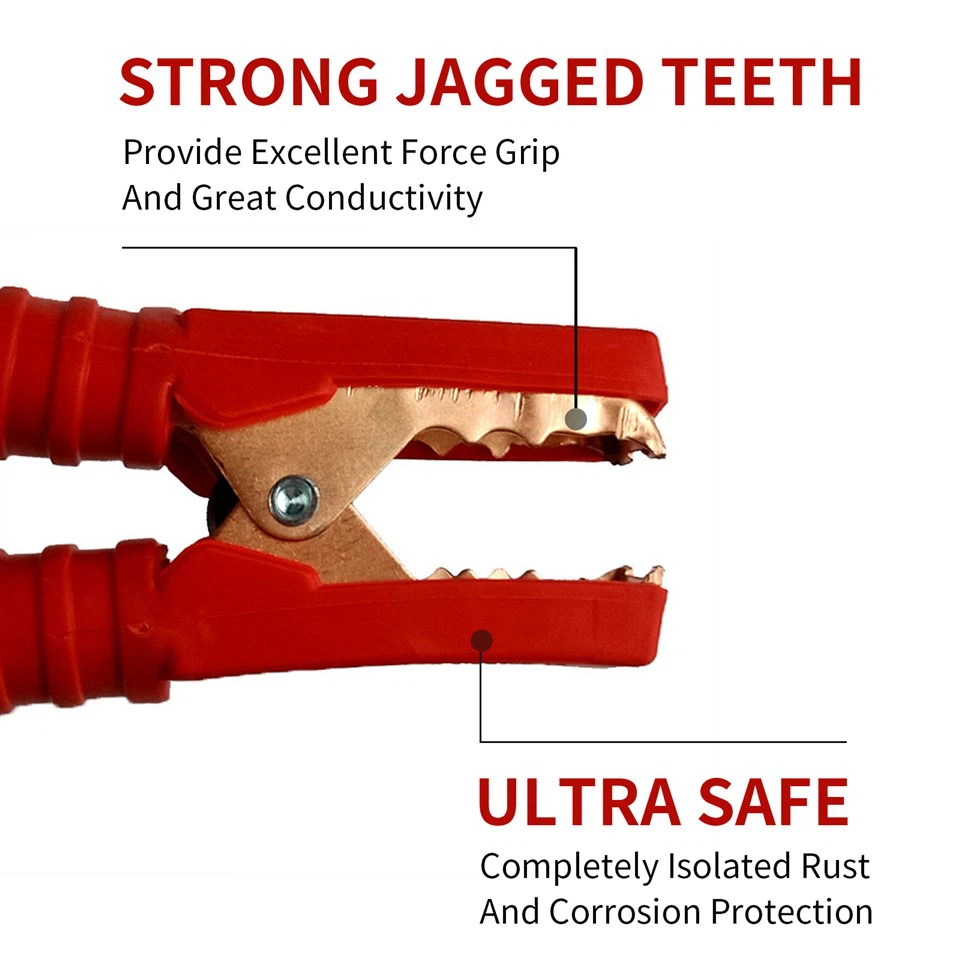
The quality of the cables is crucial. High-quality cables are made of pure copper, which has excellent conductivity. They also have well-insulated clamps that can securely attach to the battery terminals, preventing any short circuits or electrical mishaps. As a supplier, I ensure that our Car Jump Start Cable Price reflects the quality of the product, offering a range of options to suit different customer needs.
Lithium-Ion Batteries in Motorcycles
Lithium-ion batteries have gained popularity in motorcycles due to their numerous advantages. They are lighter, have a higher energy density, and can provide a more consistent voltage output compared to traditional lead-acid batteries. However, they also have some unique characteristics that need to be considered when using jumper cables.
One of the key differences is the charging and discharging profile. Lithium-ion batteries are more sensitive to overcharging and over-discharging than lead-acid batteries. Overcharging can cause the battery to overheat, leading to potential safety hazards, while over-discharging can reduce the battery's lifespan. Additionally, lithium-ion batteries often have built-in battery management systems (BMS) that regulate the charging and discharging process.
Can Automotive Battery Jumper Cables Be Used for Motorcycles with Lithium-Ion Batteries?
The short answer is yes, but with some important considerations. Automotive battery jumper cables can be used to jump-start a motorcycle with a lithium-ion battery, but it's crucial to follow the correct procedures to avoid damaging the battery or the motorcycle's electrical system.
Voltage Compatibility
The first thing to check is the voltage compatibility. Most motorcycles, whether they have lead-acid or lithium-ion batteries, operate on a 12-volt system. However, some high-performance motorcycles may have a 24-volt system. Make sure that the donor battery (the one providing the charge) and the motorcycle's battery have the same voltage. Using a higher voltage can damage the motorcycle's electrical components, while using a lower voltage may not provide enough power to start the engine.
Cable Gauge
The gauge of the jumper cables is also important. While motorcycles generally require less current to start compared to cars, using cables that are too thin may not provide enough power. On the other hand, using cables that are too thick may be cumbersome and unnecessary. As a general rule, a 6-gauge or 8-gauge cable should be sufficient for most motorcycles. Our Best Portable Jumper Cables are available in different gauges to meet various requirements.
BMS Considerations
As mentioned earlier, lithium-ion batteries often have a BMS. When jump-starting a motorcycle with a lithium-ion battery, the BMS may need to be reset or may not allow the battery to accept a charge immediately. In some cases, the BMS may detect an abnormal charging current and shut down the battery to protect it. It's important to consult the motorcycle's owner's manual or the battery manufacturer's guidelines to understand how to handle the BMS during a jump-start.

Safety Precautions
When using automotive battery jumper cables to jump-start a motorcycle with a lithium-ion battery, it's essential to follow safety precautions. Make sure the donor vehicle's engine is running at a low idle to avoid overcharging the motorcycle's battery. Also, ensure that the clamps are securely attached to the battery terminals and that there are no loose connections. Avoid touching the clamps together or allowing them to come into contact with any metal parts of the motorcycle, as this can cause a short circuit.
Step-by-Step Guide to Jump-Starting a Motorcycle with a Lithium-Ion Battery
If you've determined that it's safe to use automotive battery jumper cables to jump-start your motorcycle with a lithium-ion battery, here's a step-by-step guide:
- Turn off both vehicles: Make sure the donor vehicle and the motorcycle are turned off before connecting the jumper cables.
- Identify the battery terminals: Locate the positive (+) and negative (-) terminals on both the donor battery and the motorcycle's battery.
- Connect the positive cable: Attach one end of the positive (red) jumper cable to the positive terminal of the donor battery. Then, connect the other end of the positive cable to the positive terminal of the motorcycle's battery.
- Connect the negative cable: Attach one end of the negative (black) jumper cable to the negative terminal of the donor battery. Then, connect the other end of the negative cable to a suitable ground point on the motorcycle, such as an unpainted metal part of the frame. Avoid connecting the negative cable directly to the negative terminal of the lithium-ion battery, as this can cause a sudden surge of current.
- Start the donor vehicle: Start the engine of the donor vehicle and let it run for a few minutes to charge the motorcycle's battery.
- Start the motorcycle: Try to start the motorcycle. If it doesn't start immediately, wait a few more minutes and try again.
- Disconnect the cables: Once the motorcycle has started, carefully disconnect the jumper cables in the reverse order of how they were connected. First, remove the negative cable from the motorcycle's ground point, then the negative cable from the donor battery. Next, remove the positive cable from the motorcycle's battery, and finally, the positive cable from the donor battery.
When to Avoid Using Jumper Cables
There are some situations where it's best to avoid using automotive battery jumper cables to jump-start a motorcycle with a lithium-ion battery. If the battery is visibly damaged, swollen, or leaking, do not attempt to jump-start it. This could be a sign of a serious internal problem, and jump-starting the battery could be dangerous. In such cases, it's best to replace the battery or seek professional help.
Conclusion
In conclusion, automotive battery jumper cables can be used for motorcycles with lithium-ion batteries, but it's important to take the necessary precautions and follow the correct procedures. As a supplier of high-quality Best Heavy Duty Jumper Cables for Trucks and other automotive battery jumper cables, I understand the importance of providing reliable products and accurate information to our customers.
If you're interested in purchasing automotive battery jumper cables for your motorcycle or other vehicles, we'd love to hear from you. Whether you have questions about the product, need advice on which cable to choose, or are ready to place an order, please feel free to contact us for a procurement discussion. We're committed to providing the best products and services to meet your needs.
References
- Battery University: "Lithium-ion Batteries: Basics and Applications"
- Motorcycle Owner's Manuals
- Automotive Electrical System Textbooks