

Are there any regulations regarding the use of automotive battery jumper cables?
As a supplier of automotive battery jumper cables, I often encounter inquiries from customers about the regulations governing the use of these essential tools. In this blog post, I'll explore the various regulations and safety standards associated with automotive battery jumper cables, providing you with a comprehensive understanding of what to expect.
Safety Standards and Regulations
Automotive battery jumper cables are subject to a variety of safety standards and regulations to ensure their proper use and prevent potential hazards. These standards are established by national and international organizations to promote safety and reliability in the automotive industry.
One of the most important standards for jumper cables is the Society of Automotive Engineers (SAE) J544 standard. This standard defines the requirements for the construction, performance, and testing of automotive battery cables, including jumper cables. The SAE J544 standard specifies the minimum conductor size, insulation requirements, and current-carrying capacity for jumper cables based on their gauge (thickness).

In addition to the SAE J544 standard, jumper cables may also be subject to other safety standards and regulations, depending on the country or region in which they are used. For example, in the United States, jumper cables must comply with the safety requirements of the Occupational Safety and Health Administration (OSHA) and the Consumer Product Safety Commission (CPSC). These regulations are designed to protect workers and consumers from electrical hazards and ensure the safe use of electrical equipment.
Conductor Size and Gauge
The conductor size and gauge of jumper cables are important factors that determine their performance and safety. The gauge of a cable refers to its thickness, with lower gauge numbers indicating thicker cables. Thicker cables have lower resistance and can carry more current, which is essential for effectively jump-starting a vehicle's battery.
The SAE J544 standard specifies the minimum conductor size and gauge requirements for jumper cables based on their intended use. For example, jumper cables designed for use with passenger cars typically have a gauge of 6 or 8, while cables for larger vehicles such as trucks and SUVs may have a gauge of 2 or 4. Using jumper cables with the appropriate gauge for your vehicle is crucial to ensure a safe and effective jump-start.
Insulation and Jacketing
The insulation and jacketing of jumper cables are also important for safety and performance. The insulation protects the conductors from electrical shock and prevents short circuits, while the jacketing provides additional protection against abrasion, heat, and environmental factors.
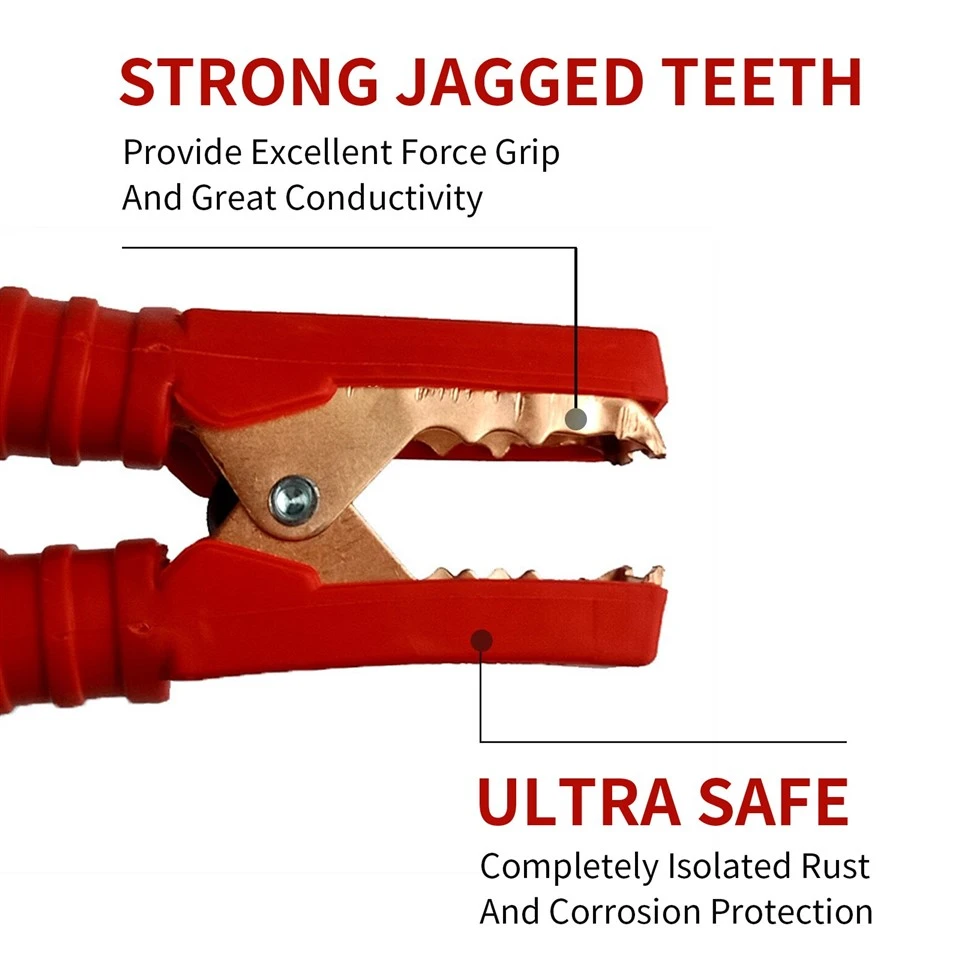
Jumper cables typically have a rubber or PVC insulation and a durable outer jacket. The insulation should be thick enough to provide adequate protection against electrical shock, and the jacket should be resistant to abrasion, oil, and other contaminants. When choosing jumper cables, look for cables with high-quality insulation and jacketing to ensure their reliability and longevity.
Color Coding and Polarity
Color coding and polarity are important safety features of jumper cables. Jumper cables are typically color-coded to indicate the positive and negative terminals of the battery. The positive terminal is usually marked with a red cable, while the negative terminal is marked with a black cable.
It is crucial to connect the jumper cables correctly to avoid electrical shock, short circuits, and damage to the vehicles' electrical systems. Always connect the positive cable to the positive terminal of the dead battery and the positive terminal of the donor battery, and then connect the negative cable to the negative terminal of the donor battery and a grounded metal surface on the vehicle with the dead battery.
Usage Guidelines and Precautions
In addition to complying with safety standards and regulations, it is important to follow proper usage guidelines and precautions when using automotive battery jumper cables. Here are some tips to ensure a safe and effective jump-start:
- Read the vehicle's owner's manual: Before attempting to jump-start a vehicle, read the owner's manual to familiarize yourself with the proper procedures and precautions.
- Inspect the cables: Before using the jumper cables, inspect them for any signs of damage, such as frayed wires or cracked insulation. Do not use damaged cables.
- Turn off both vehicles: Before connecting the jumper cables, turn off both vehicles and all electrical accessories to prevent electrical shock and damage to the vehicles' electrical systems.
- Connect the cables correctly: Follow the color coding and polarity guidelines to connect the jumper cables correctly. Do not cross the cables or connect them to the wrong terminals.
- Start the donor vehicle: After connecting the cables, start the donor vehicle and let it run for a few minutes to charge the dead battery.
- Start the vehicle with the dead battery: Try to start the vehicle with the dead battery. If it does not start, wait a few more minutes and try again. Do not attempt to start the vehicle more than three times in a row.
- Disconnect the cables: After the vehicle with the dead battery has started, let it run for a few minutes to charge the battery. Then, disconnect the jumper cables in the reverse order of how they were connected.
Our Product Offerings
As a leading supplier of automotive battery jumper cables, we offer a wide range of high-quality cables to meet the needs of our customers. Our cables are designed and manufactured to meet or exceed the safety standards and regulations of the automotive industry, ensuring their reliability and performance.
We offer a variety of jumper cables, including Best Heavy Duty Jumper Cables for Trucks, Jumper Cables Portable Battery Charger, and Car Jump Start Cable Price. Our cables are available in different gauges, lengths, and configurations to suit your specific requirements.
Whether you are a professional mechanic, a DIY enthusiast, or a vehicle owner, we have the right jumper cables for you. Our cables are backed by our commitment to quality and customer satisfaction, and we offer competitive prices and fast shipping.
Contact Us for Procurement
If you are interested in purchasing automotive battery jumper cables, we invite you to contact us for procurement. Our team of experts is available to assist you in selecting the right cables for your needs and providing you with competitive pricing and excellent customer service.
We understand the importance of quality and reliability when it comes to automotive battery jumper cables, and we are committed to providing our customers with the best products and services. Contact us today to learn more about our product offerings and to place your order.
References
- Society of Automotive Engineers (SAE) J544 standard
- Occupational Safety and Health Administration (OSHA) regulations
- Consumer Product Safety Commission (CPSC) regulations